The Story
Why it exists.
The beginning
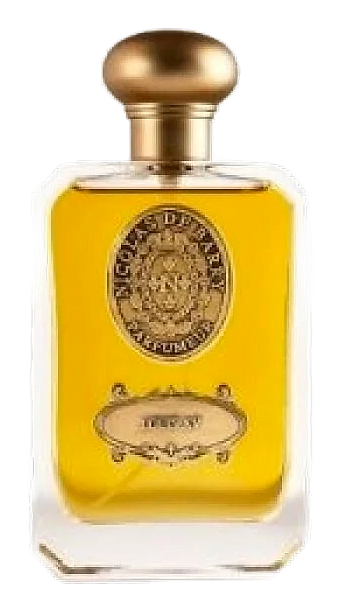
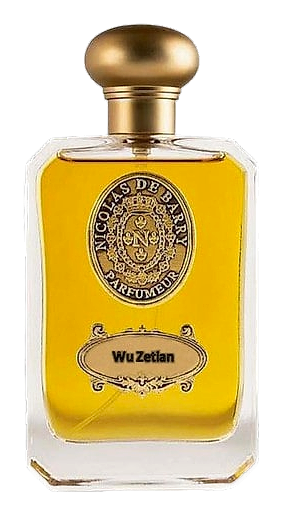
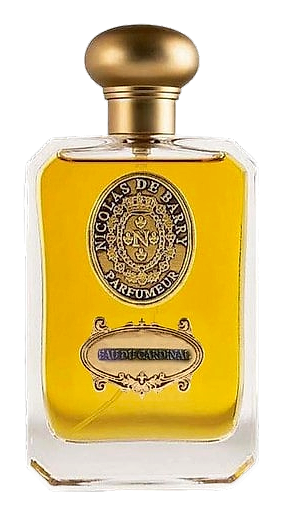
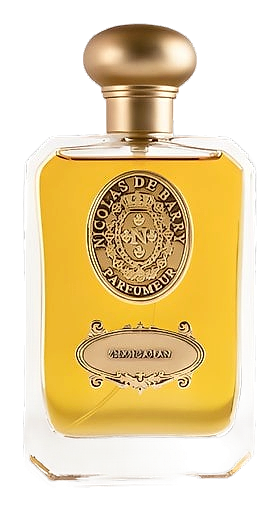
L'eau de Shah Jahan was created by Nicolas de Barry and launched in 2003. Its subject is Shah Jahan, the Mughal emperor, placing the composition within the Indian court culture that gave imperial attar its prestige. The fragrance draws on three decisive materials: Indian rose, sandalwood, and Assam oud. Each of them carries a distinct register of its own, and together they form the composition's central character. The rose contributes floral brightness and a poised, aristocratic lift. Sandalwood adds warmth and a smooth, polished body that settles close to the skin. Assam oud anchors the whole with resinous depth, giving the scent a darker, more austere edge.
The composition is spare in effect, and that restraint defines how it reads. A single rose brings floral brightness, sandalwood supplies the warm polished center, and Assam oud gives the base resinous depth. The combination creates a useful tension: rose usually reads soft, sandalwood polished, and oud dense, yet together they become angular and slightly austere, without the sugariness that a conventional rose fragrance often carries. The materials speak to one another rather than competing for attention.
The evolution
The first impression is cool and silvered. Indian rose arrives with a tart, almost rhubarb-like edge, bright enough to feel freshly drawn rather than heavily perfumed. As the opening loses its lift, sandalwood moves into the center, adding warmth and a smooth, woody body without burying the flower. The composition then turns inward. Assam oud pulls the rose and sandalwood into resinous shadow, introducing a woody sourness around the edges. As the scent settles, the floral character returns late, resurfacing through the darker woody base rather than leading the composition. What remains is a close impression of polished timber, resin, and a faint trace of smoke, with rose still present but no longer at the front. The drydown stays intimate and quietly complex, the kind of scent that reads in small doses rather than announcing itself from a distance.
Cultural impact
L'eau de Shah Jahan draws on Mughal imperial culture through its materials and its namesake, Shah Jahan, the emperor whose court is closely associated with rose, sandalwood, and oud. The fragrance is also positioned in relation to L'eau de Mumtaz-i Mahal, which the source material treats as a counterpart, creating a paired view of Mughal court scent through the shared language of rose, sandalwood, and oud. Where the two differ is in how those materials are framed. Shah Jahan reads cool, silvered, and angular, opening with a tart rose edge before settling into warm sandalwood and resinous oud.
The House
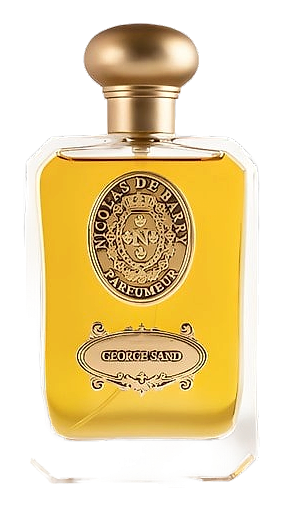
Maison Nicolas de BarryMaison Nicolas de Barry is a French haute parfumerie house distinguished by its singular focus on historical scent recreation. Founded by Nicolas de Barry in 2003, the house specializes in bringing to life the fragrances that might have been worn by significant figures from European and world history, from Renaissance queens to Mughal emperors. The collection includes scents inspired by Nostradamus, Louis XV, Empress Sissi, George Sand, Cardinal Richelieu, and figures from Mughal India including Mumtaz-i Mahal and Shah Jahan. Each fragrance in the Les Parfums Historiques line represents meticulous historical research combined with classical perfumery techniques, offering wearers a sensory connection to the past.
The Creator
Nicolas de BarryDe Barry's signature lies in historical reconstruction grounded in meticulous research. He combines a historian's precision with a perfumer's sensitivity, studying period texts, trade records, and ingredient lists to understand how formulas evolved across centuries.