
The Story
Why it exists.
The beginning
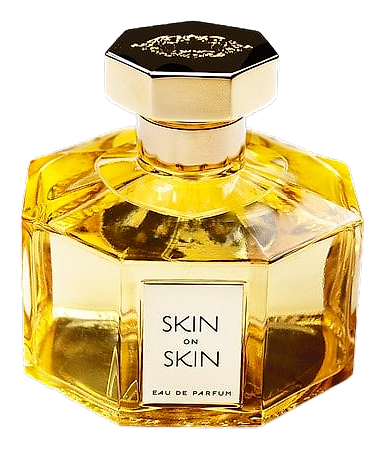
Bertrand Duchaufour built Skin on Skin around a single idea: the moment two people touch and don't let go. Launched in 2013 as part of L'Artisan Parfumeur's Explosions d'Emotions collection, the brief was specificity itself, not an abstract fragrance, but the olfactory texture of contact. Skin on skin. Warmth against warmth. What happens when the distance disappears. The result feels immediate and tactile, like fabric sliding across skin, carrying warmth and the ghost of presence. It asks the wearer to lean in rather than reach out.
The composition works through contrast rather than harmony. Saffron brings a warm, almost metallic brightness that mingles with whiskey's golden grain. Iris, powdery and violet-dusted, arrives like suede softening in heat. The rose doesn't read floral so much as warm. A breath. A closeness. As the fragrance develops, the suede and skin accord create something that feels less like separate notes and more like a continuous texture, the tactile equivalent of fabric sliding against skin.
The evolution
The opening brings saffron and whiskey together, warm and inviting, with the lavender providing a subtle herbal undertone. The suede soon becomes prominent, not sharp leather but something softer, yielding. The iris follows, powdery and grainy, turning the composition toward violet and warmth. The rose registers as something warm rather than purely floral, a breath of presence. As the drydown arrives, musk and skin accord settle into something intimate. Close. The kind of warmth that lingers. The sillage remains present without being overwhelming, allowing the fragrance to inhabit a space rather than fill it. What remains on skin is soft, amber, and personal, a quiet signature that rewards those who draw near.
Cultural impact
Skin on Skin occupies a particular space in the niche fragrance landscape, neither the grand statement of a room-filling oriental nor the quiet discretion of a barely-there skin-scent. It exists for the wearer who wants presence without projection, intimacy over announcement. The fragrance leans into something more abstracted: the idea of contact itself, rendered in suede and whiskey and musk. Its texture-forward approach sets it apart from more traditionally structured releases, offering something that feels less like a list of notes and more like an experience of closeness.
The House
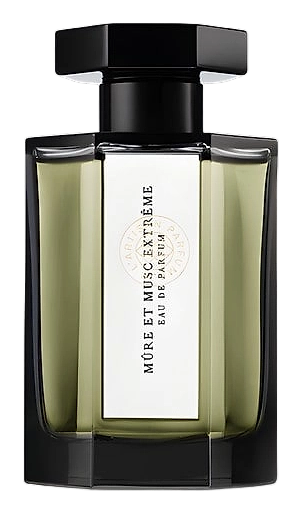
L'Artisan ParfumeurL'Artisan Parfumeur arrived in 1976 with a quietly radical idea: perfume should feel personal, not mass-produced. Founded by chemist Jean Laporte in Paris, the house became one of the first true niche fragrance houses, championing natural ingredients and artisanal craft at a time when blockbuster launches dominated the market. Its Mûre et Musc, launched in 1978, paired blackberry and musk in a way no one had attempted before, and it became a sensation. Over nearly five decades, the house has continued to create unusual fragrances with distinguished noses, never following trends but trusting instead in beautiful materials and imaginative composition.
The Creator
Bertrand DuchaufourDuchaufour is the master of smoke and shadow, of incense rendered with painterly depth rather than theatrical force. Where many perfumers treat frankincense as a single note, he builds incense as a tonal range, capable of austerity or warmth depending on what the fragrance dem…