
The Story
Why it exists.
The beginning
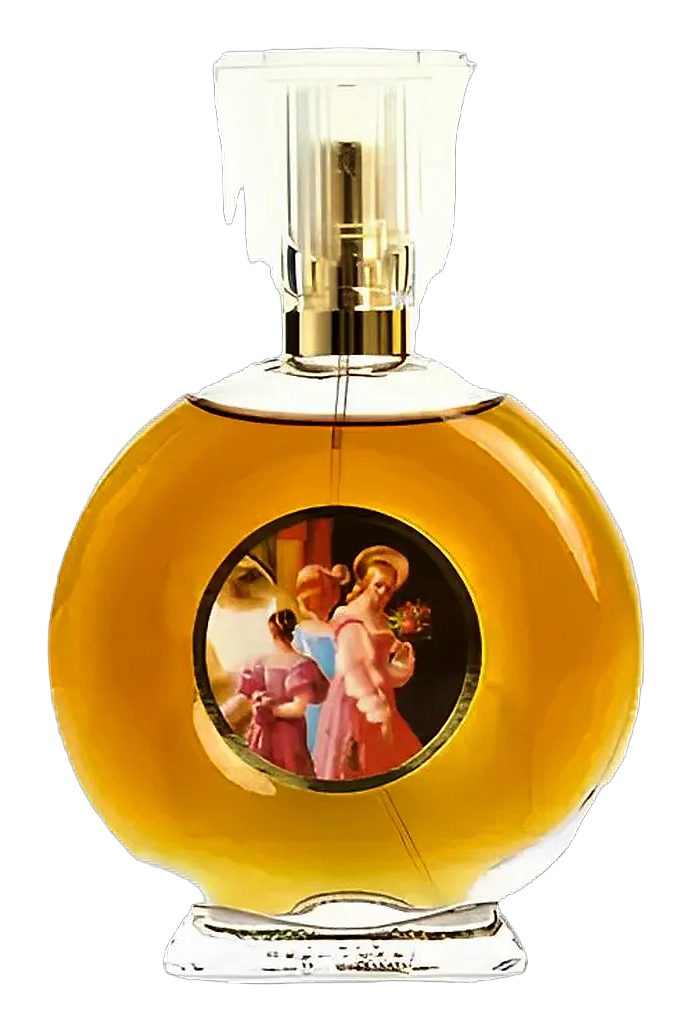
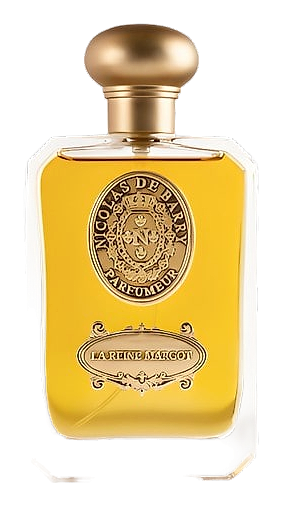
Marguerite de Valois, La Reine Margot, ruled the French Renaissance in more ways than one. Courted by Navarre, married for politics, she was the queen who read Machiavelli for pleasure and kept company that made the court nervous. Nicolas de Barry and Eddy Blanchet imagined what she would have worn. Not the powder and aldehydes of later centuries, but something the Renaissance actually had: jasmine, distilled fresh, mixed with the amber and musk that smelled like skin, not like perfume. The composition deliberately avoids neroli and bergamot, notes that didn't become fashionable until a century later. So instead, they recreated what no longer exists on the market: cold jasmine enfleurage and natural musk, approximated through careful craft and natural materials.
The pyramid is almost shockingly simple after the first read: jasmine top, jasmine heart, amber and musk base. One flower carrying the entire structure. But that's precisely what makes it interesting. Natural jasmine, the kind de Barry references, isn't the bright, high-pitched solar note of synthetic variants. It has a dusky quality, a creaminess that borders on animalic. One reviewer describes it as smelling like a natural jasmine ruh: round, creamily sweet, with that slightly muddy, plasticky undertone that identifies it as the real thing. Against the honeyed amber and the sensual, slightly spicy musk, the jasmine doesn't compete. It deepens.
The evolution
The opening arrives soft. No citrus lift, no sharp top to announce itself, just jasmine, immediate and warm, the way it might smell if you pressed your face into a basket of blooms in a sun-warmed market. The creamy, slightly dusky character reads first. For the first hour, it's pure jasmine over a whisper of amber. Then the honeyed amber starts to surface, adding roundness without sweetness. The musk appears around the second hour, not loud, not projecting, but present, a warmth that holds everything together. By hour four, you're into the drydown: amber and musk, close to the skin, intimate in the way that natural musk always is. Eight to ten hours is the range, though it fades to memory before it fades to nothing. On fabric, it lingers until the next wash.
Cultural impact
L'eau de la Reine Margot stands at the intersection of historical scholarship and perfumery. Maison Nicolas de Barry's Les Parfums Historiques collection treats fragrance as cultural documentation rather than commercial product. This 2003 release recreates jasmine and musk traditions from 16th-century France, a period when perfume was reserved for royalty and the elite. The jasmine used represents a deliberate choice to honor Renaissance apothecary traditions. At a time when mainstream perfumery focuses on modern synthetic compounds and commercial accessibility, this fragrance offers a window into how scent functioned as status marker and personal signature among French nobility.