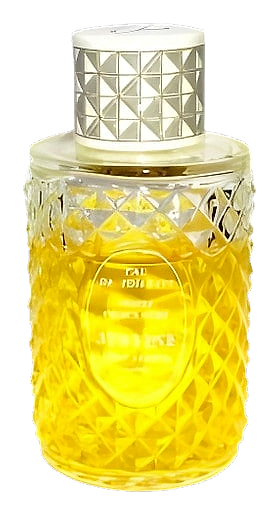

The Story
Why it exists.
The beginning
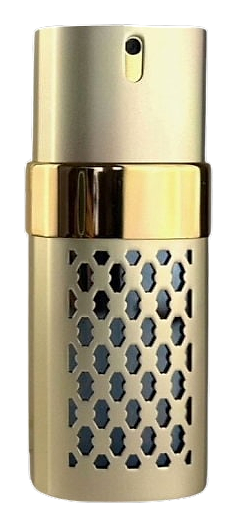
Robert Gonnon created Justine in 1965, when perfume houses hadn't yet learned to sand down their edges. The name, Justine, suggests something classical, perhaps even moral, which makes the fragrance's animalic pulse all the more interesting. Gonnon built this around a tension: pristine white florals held in check by something decidedly not pristine. The civet wasn't a supporting player. It was the point.
The combination of civet and oakmoss is what defines a chypre, a family of fragrances named after the island of Cyprus, where the original accord was said to have originated. But Justine doesn't just wear the chypre label. It embodies it. The green notes at the opening, the white floral heart, the animalic-mossy base, this is a textbook chypre structure, executed without compromise. Gonnon understood that the civet's feral warmth and the oakmoss's earthy depth weren't obstacles to beauty. They were the beauty.
The evolution
The opening is all immediate sensation, citrus cutting through green, a crisp brightness that announces itself without apology. Then, within minutes, the hand-off: the florals arrive. Tuberose leads, but ylang-ylang follows close behind, adding a warm, almost waxy depth to the white floral heart. Jasmine whispers. The Bulgarian rose adds a quiet formality. Lily holds everything together. Two hours in, the civet announces itself. Not aggressively, but unmistakably. This is where Justine separates itself from modern interpretations. The animalic note isn't buried or softened. It's there, alive, holding the white florals accountable for their abundance. Oakmoss anchors the composition into something forest-floor damp and eternal. By hour six, the civet has softened into a warm skin-note. The oakmoss lingers. Woody notes, dry, quiet, complete the picture. Eight to ten hours total. Moderate sillage throughout. The drydown stays close, intimate, drawing in rather than announcing. This is how chypre wears on skin: not a performance but a conversation.
Cultural impact
Justine appeared in 1965, an era when perfume houses were still building in real animalics and mosses without the regulatory constraints that would later reshape the industry. Robert Gonnon's composition reflects that moment, confident, uncompromising, structured around a chypre accord that modern perfumery has largely abandoned. The fragrance holds a particular appeal for those seeking vintage chypre character: the green-floral-animalic-mossy structure that defined the category before reformulation and restraint became industry standards.