The Story
Why it exists.
The beginning
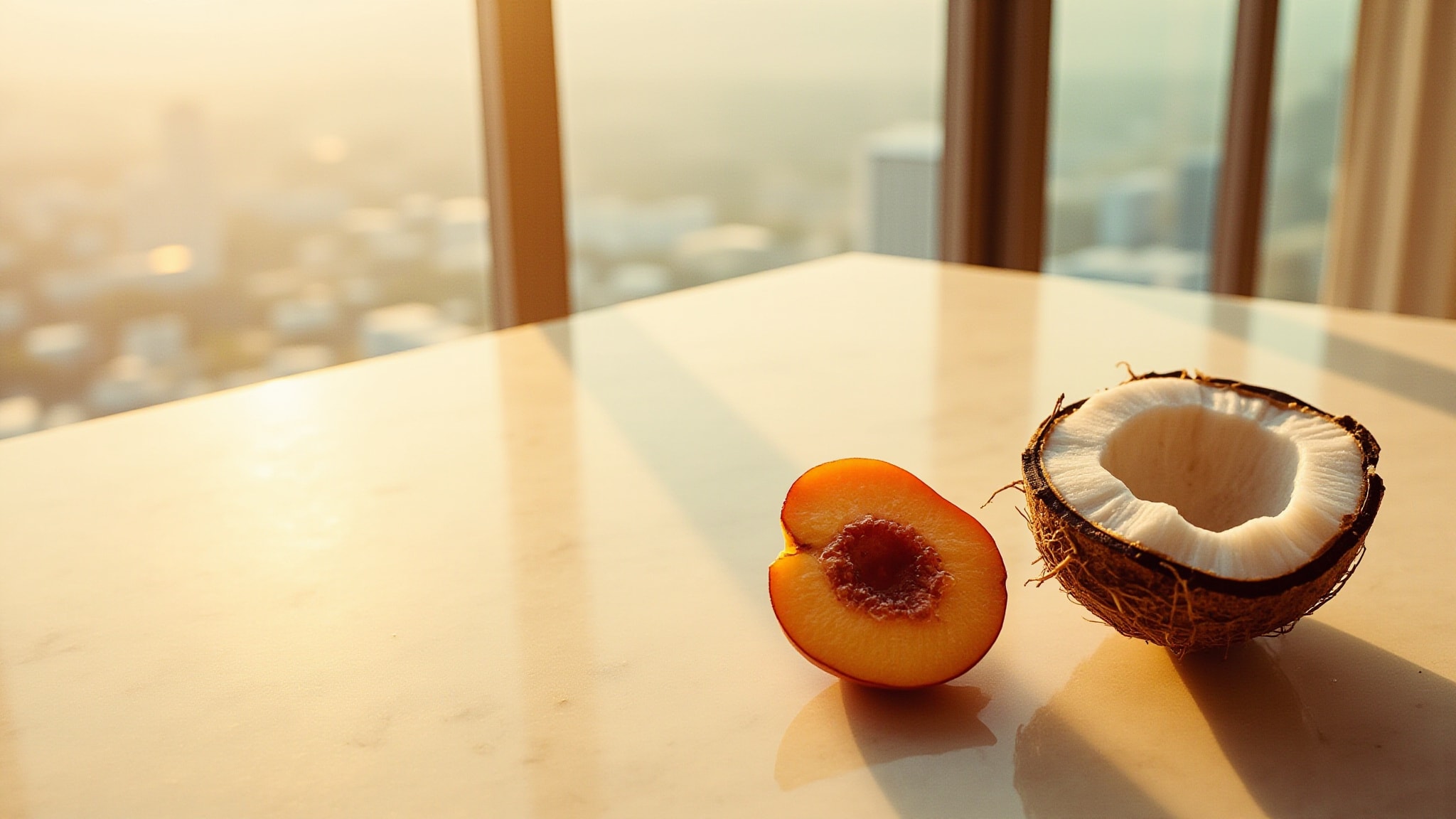
The name says everything. Le Fruit Défendu, the forbidden fruit. Henri Alméras built this in 1918 with the kind of confidence that only exists when a perfumer knows exactly what they're reaching for. Not an accident. Not a formula. A statement: sweetness can be a full argument. Peach, coconut, plum, apple, layered until the fruit becomes something richer than any single note. Aldehydes gave it the lift, the vintage gloss that separated it from mere sweetness. This was composed during a moment when women's perfumery was still finding its grammar. Alméras wrote a full sentence.
What makes this work is the fruit-to-pastry logic. Peach and coconut open bright and almost too sweet, then the aldehydes arrive to sharpen everything into something waxy and edible, the texture of skin after it's been in warm sun. Tuberose and gardenia push through the heart without taking over, keeping the white floral quiet while the honey and cinnamon build warmth underneath. By the base, the whole thing has become almond pastry: sandalwood, vanilla, tonka bean, ambergris binding it all into something that lasts. The ambergris adds that slight waxy-animalic depth that stops it from being just dessert.
The evolution
It opens bright. Peach and coconut, aldehydes lifting everything upward, the apple and orange giving it a brief tartness before the sweetness settles in. The aldehydes give an almost effervescent quality to the opening, brightening the fruit and creating a luminous quality that feels both fresh and decadent at once. Then the heart takes over: tuberose and gardenia arrive quietly, honey adding body, the cinnamon giving a warm spice that prevents it from going flat. The florals weave through the fruit rather than replacing it, creating a creamy, lush middle stage that feels both romantic and sumptuous. The transition from top to heart is seamless, the fruit doesn't disappear, it deepens, becoming richer and more integrated with each passing moment.
Cultural impact
Le Fruit Défendu stands as a remarkable study in early fruity fragrance creation. Sampled from the Osmothèque in Versailles alongside Iris Gris and Fougère Royale, it offers a window into what women's fragrance could achieve in its experimental early decades. The aldehydic fruity pastry character reads as pioneering, a bold statement of what sweet could mean when unapologetic and confident.