The Story
Why it exists.
The beginning
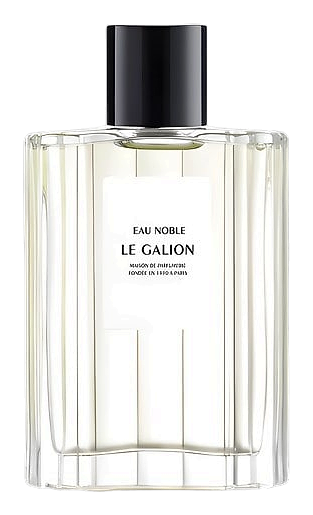
Eau Noble (2022) marks Rodrigo Flores-Roux's contribution to Le Galion, a study in restraint that approaches the house's heritage through a modern lens. "Noble water" becomes something specific: blood orange cutting through rhubarb's tartness, geranium and pine needles taking over, cedar and cypress settling in dry and assured. Translated into contemporary taste, the composition moves from tart citrus through aromatic complexity to woody depth. The perfumer's task: honor Le Galion's quiet authority while making it breathe for a new audience.
The structure guides everything. Tart citrus opening. Aromatic heart. Woody base. But Le Galion's interpretation uses restraint, each note arriving, then yielding, rather than piling on. The top notes feel considered: blood orange and rhubarb provide immediate brightness, while Reseda adds a refined green quality. Mastic brings dry, aromatic character. In the heart, geranium provides the rosy-green warmth, while ginger contributes clean heat. Sandalwood begins its work, softening edges before the drydown arrives.
The evolution
As the scent develops, the citrus brightness softens. Blood orange and rhubarb give way to something more aromatic: geranium's rosy-green warmth meeting pine needles' sharp clarity. The ginger arrives clean and warm, bridging the opening to the heart without urgency. Sandalwood begins its slow work, softening edges before the drydown arrives. The woody base takes over: Atlas cedar and cypress asserting their dry, almost coniferous character. Patchouli adds depth without going earthy. Labdanum threads through, a faint resinous amber that keeps the woods from feeling skeletal. This is the phase worth waiting for, the drydown that makes sense of everything that came before, lasting long after the initial brightness has gone.
Cultural impact
Eau Noble offers something different: restraint applied to classical structure. The fougère structure, often associated with bold presence, becomes here something quiet and lasting. This interpretation of the fougère structure offers a different kind of presence, one that is quiet, lasting, built on restraint applied to classical form.