
The Story
Why it exists.
The beginning
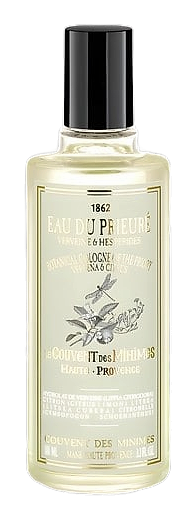
Eau du Prieuré arrived in 2017 from Le Couvent Maison de Parfum. There are no perfumer credits on record for this release, so the composition speaks for itself. Verbena, orange, lemon, thyme, and mint make the opening, combining bright citrus with a cool herbal edge. Lemongrass, lemon tree bark, litsea cubeba, and petitgrain carry the middle. The citrus fruit gives way to greener notes: lemongrass adds a soft, grassy character, the bark introduces dry texture, litsea cubeba brings a lightly spiced lift, and petitgrain lends a leafy bitterness. Geranium, Brazilian rosewood, and sage hold the base. Geranium adds a restrained floral warmth, rosewood smooths the composition with a polished woodiness, and sage gives it a clean herbal finish.
Lemon tree bark in the heart is the curious note here. Most citrus fragrances reach for juice or peel. Bark gives something drier, more fibrous, closer to the tree itself than the fruit hanging from it. Pair it with litsea cubeba, a sharp green spice with a lemon-lime snap, and petitgrain's leafy bitterness, and the middle becomes less of a fruit basket and more of a botanical counter. It's a citrus arrangement that keeps talking back.
The evolution
The opening is all snap. Citrus fruit, orange, mint, and lemon verbena cut in fast, the way cold air moves through a courtyard before the sun reaches the walls. Thyme adds the first sign of intention, something herbal and slightly medicinal laid over the brightness. Within the first hour, lemongrass and lemon tree bark take over, pulling the composition from fruit toward plant, while litsea cubeba keeps a green spice flick at the edge. Petitgrain settles in with its leafy bitterness. Then the drydown begins its quiet work. Geranium and sage arrive as the citrus recedes, and Brazilian rosewood gives the whole thing a smooth, woody floor. The citrus notes soften gradually rather than vanishing all at once, leaving their tart character threaded through the herbs.
Cultural impact
Eau du Prieuré offers a composed fragrance for those drawn to the meeting point of citrus and herbs. Its structure is notably restrained: lemon verbena, orange, lemon, thyme, and mint establish a lucid opening without relying on rich sweetness or dense floral opulence. Lemongrass and lemon tree bark deepen that brightness with grassy and dry woody textures, while litsea cubeba adds a lightly spiced edge. Petitgrain contributes a leafy bitterness that strengthens the fragrance's green character. In the base, geranium lends a subtle floral warmth, Brazilian rosewood supplies smooth woodiness, and sage brings a clean aromatic finish.