The Story
Why it exists.
The beginning
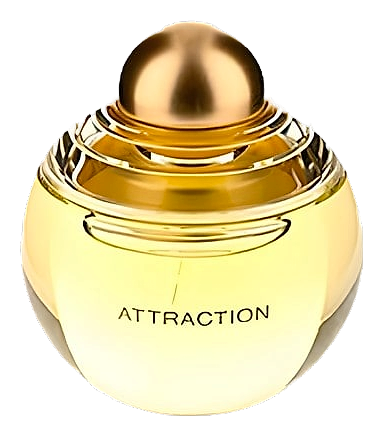
Christian Biecher and Daniela Andrier built Attraction in 2003 as an answer to a decade of brightness. Where the early 2000s leaned into citrus and aquatic notes, this fragrance went the other direction, warm, close, sophisticated. The composition paired gardenia and neroli's natural light with the depth of iris and patchouli, creating a tension between airy florals and earthy warmth. The round bottle with its golden cap became an icon in its own right. It was a deliberate move toward a different kind of femininity: not the girl next door, but the woman who knows exactly what she's doing.
The iris is the move. It's one of the most expensive materials in perfumery, the root needs years to cure before it yields anything usable, and Biecher and Andrier didn't hide that. The powdery, slightly abstract quality of iris bridges the gap between the lush white florals and the woody base, giving the heart an unusual depth. Patchouli does the grounding here. Not the bold, earthy patchouli of the 1970s, something softer, almost mineral, that makes the florals feel less sweet and more complex. Together, they turn what could have been a straightforward floral into something with real structure.
The evolution
The opening is all bloom. Gardenia and ylang-ylang arrive creamy, almost buttery, with a brief citrus lift from neroli that keeps things from getting too heavy too soon. Within twenty minutes, the florals begin to layer, Bulgarian rose, jasmine, and orange blossom stacking on top of each other, creating a heart that feels dense without being claustrophobic. The iris is there from the start, but it doesn't announce itself. It waits. Around the second hour, the drydown takes over: cedar and patchouli arrive together, warming everything beneath them, as vanilla and musk create that skin-close intimacy that makes this fragrance feel personal rather than performative. What stands out, even years later, is how slowly it moves. The heart doesn't vanish, it deepens, becomes quieter, almost intimate. And that cedar-patchouli drydown lingers for hours after everything else has settled. Some modern fragrances sprint through their phases. Attraction walks.
Cultural impact
Attraction arrived in 2003 with a different kind of ambition, not to shout, but to settle. Where many fragrances of that era leaned into brightness or aquatic freshness, this one went warm, powdery, and close to the skin. The combination of powdery iris, lush white florals, and a woody-musky base created something that felt both sophisticated and approachable, a quality that still defines what many people mean when they describe a fragrance as elegant.
The House
LancômeLancôme stands as one of France's most enduring luxury beauty houses, a name synonymous with elegant femininity and the art of French perfumery. Founded in 1935 by Armand Petitjean, the house emerged during economic uncertainty with a clear mission: to bring prestige back to beauty after witnessing the mass-market drift of his former employer. Today, operating under L'Oréal's luxury division, Lancôme balances heritage with modernity, crafting fragrances like La Vie Est Belle and Trésor that have become global icons while maintaining the golden rose emblem that has marked its bottles for nearly ninety years.
The Creator
Christian BiecherBiecher's style tends toward the sophisticated and refined. He favors compositions with clear structure and identifiable character.