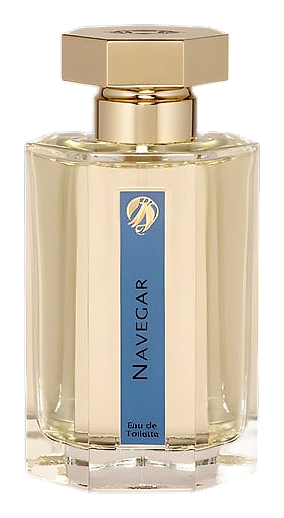

The Story
Why it exists.
The beginning
Navegar means to navigate, to chart a course through open water. Olivia Giacobetti created this fragrance in 1998 with that maritime spirit in mind. Giacobetti reached for lime and ginger first, bright, almost bracing materials that open like a window on a moving boat. Then the heart: star anise and rum, an unexpected pairing that adds depth without sweetness. Cedar and frankincense anchor it all, the kind of base that feels sun-warmed and slightly smoky. The name isn't metaphorical. Navegar is a fragrance for moving through.
What makes Navegar unusual is its structure. Most spicy-woody fragrances build toward warmth, but this one opens with its brightest material, the lime cuts sharp and clean, then yields almost immediately to something earthier. The star anise doesn't announce itself loudly; it surfaces gradually, threading through the rum like a whisper. Guaiac wood is the quiet workhorse here, providing a smoky, slightly balsamic quality that keeps the composition grounded without ever becoming heavy. Giacobetti uses frankincense sparingly, enough to add a resinous depth but not enough to dominate. The result is a fragrance that feels balanced rather than bold, the kind of scent that rewards attention rather than demanding it.
The evolution
The opening announces lime and ginger together, a bright entrance before the pink pepper adds a faint prickle. The handoff to the heart is gradual: star anise emerges slowly, almost shy, while the rum note provides a soft warmth underneath without tipping into sweetness. This middle phase is where Navegar spends most of its time, a slow exhale of spice and wood that lingers for hours. The base arrives quietly: cedar and guaiac wood settling into the skin, the frankincense providing a faint resinous trail. What remains is a clean, warm skin scent, the kind of thing you catch when you lift your wrist to your nose. It doesn't project, but it stays close, like driftwood still holding the memory of the sea.
Cultural impact
Navegar occupies an interesting position in the L'Artisan catalog, released in 1998. The anise note remains the fragrance's defining characteristic, polarizing, distinctive, the kind of choice that signals a wearer with specific tastes. Among Giacobetti's work, it stands as one of her more accessible compositions, less challenging than Premier Figuier but more interesting than many of her contemporaries.