The Story
Why it exists.
The beginning
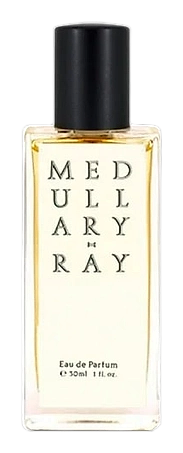
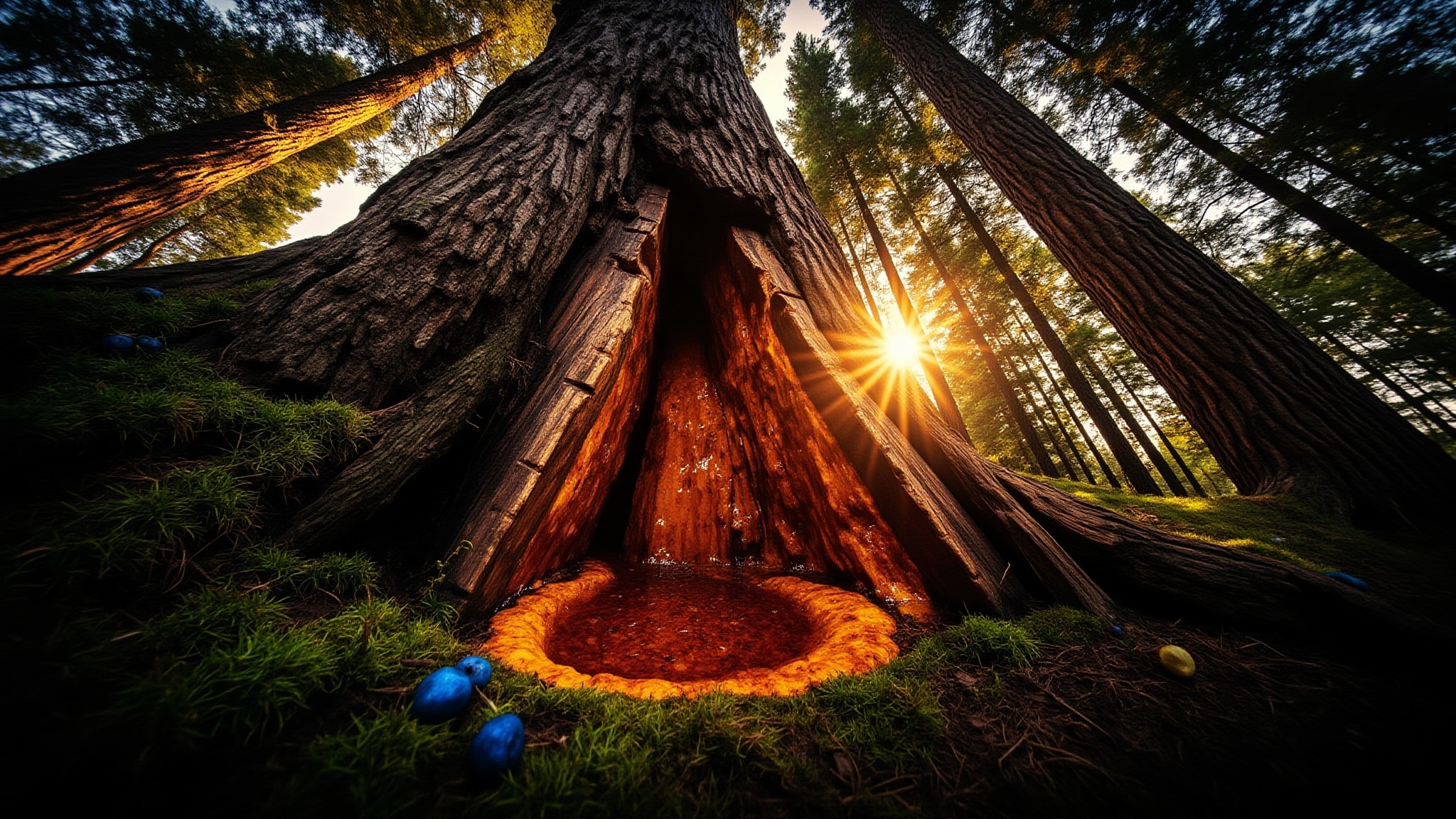
Jorum Studio, founded in Scotland in 2019, operates at the intersection of everyday humour and nature-inspired poetry, and Medullary-ray exemplifies this sensibility. Perfumer Euan McCall, whose background bridges natural perfumery and fragrance chemistry, chose to honour the inner anatomy of trees rather than their blooms or fruits, naming his 2019 launch after medullary rays, the microscopic channels within trunks that transport nutrients and store energy. The fragrance functions as a vertical cross-section of wood, its dense heart of guaiac wood, cedarwood, sandalwood, birch, and papyrus referencing the structural heartwood itself while hay, fig leaf, and olive extend into the bark and surrounding vegetation. Instead of building toward conventional opening and drydown phases, McCall chose to eliminate these entirely, presenting the trunk's living core directly.
The philosophical justification for Medullary-ray's heart-only structure lies in its source material. Medullary rays are not an outer bark or inner core; they are the internal transport system, the living middle. McCall translated this biological reality into perfume structure by treating the heart as both origin and destination. The absence of a top or base is not a limitation but a conceptual decision: wearing Medullary-ray means inhabiting a trunk's living interior, surrounded by its materials rather than approaching or departing from them.
The evolution
Medullary-ray begins immediately in its heart phase, the concept of opening notes abandoned in favour of pure arboreal expression. The first minutes reveal a layered encounter between coniferous woods and warm resins: guaiac wood's smoky sweetness, cedarwood's pencil-shaving precision, and birch's methyl salicylate brightness arrive together, joined by papyrus's papery dryness and an immediate wave of myrrh's camphorated warmth. Castoreum's animalic depth appears within the opening minutes, threading through the woods like the vascular bundles within a real trunk's medullary rays. As the composition evolves over the first few hours, hay's pastoral grain and olive's verdant, slightly fatty quality soften the coniferous sharpness, while juniper and vetiver extend the coniferous register into earthier, more medicinal territory. Frankincense adds wisps of sacred smoke, cardamom introduces fleeting spice, and orris root contributes powdery violet floralcy.
Cultural impact
Since joining the Progressive Botany Vol. I collection, Medullary-ray has been praised for its dense, almost tactile woodiness. Wearers describe it as the scent of a woodworker’s workshop after a day of carving, a quiet power that commands attention without shouting. Its unique blend of olive and medullary‑ray wood sets it apart in the niche woody‑spicy arena, earning a loyal following among those who crave a grounded yet sophisticated aroma.