
The Story
Why it exists.
The beginning
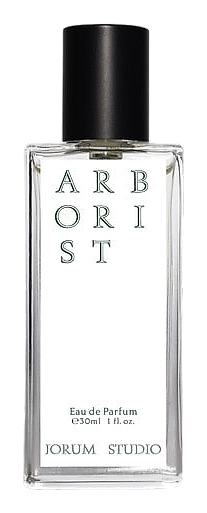
Arborist was conceived as an imagined day in the life of someone who works the forest floor, someone intimately connected to trees and their surroundings. The fragrance captures the rhythm of those hours among the trees, the quiet attention required to understand a landscape that reveals itself slowly. Scotland provided the material inspiration, with its mossy glens and ancient woodlands offering a sensory vocabulary of green growth, damp earth, and the quiet persistence of nature. The brief was botanical precision with something human threaded through it, the warmth of skin after a morning in the cold, the oil on a blade, the sweetness of a flask finally opened. The resulting fragrance carries that sensibility: wry, poetic, never precious.
What makes this work is the restraint at the center of the composition. The heart is dense, osmanthus absolute, rose absolute, tuberose, magnolia, labdanum, but the saffron opening keeps everything honest. It doesn't let the florals go sweet and romantic. The malt whisky note is doing something unusual: it's warmth without sweetness. The honey is there but buried under the resin. Quince brings a fruitiness that stays quiet and almost savory. Burdock, lichen, papyrus, these are materials that smell like the forest floor, not like a fantasy of it. This is the difference between a fragrance that references nature and one that actually smells like it.
The evolution
The opening hits bold and floral-spicy. Saffron is immediate, bright, almost metallic, the kind of warmth that doesn't ask permission. Osmanthus and honey follow, softening the edges into something rounder and more inviting. The sweetness of quince and the green of burdock keep it from feeling too heavy. Then the florals settle and the forest arrives. Fir and spruce assert themselves, resinous and honest. Douglas fir and spikenard deepen the canopy. A malt whisky note threads through as warmth, not gimmick, like the memory of a glass left half-finished on a windowsill. The composition turns inward: labdanum, myrrh, and papyrus form a warm, slightly dusty base. Lichen and honey linger longest, giving the drydown a quality that reads as skin, not synthetic skin, but the warmth of someone who was just in the woods and hasn't quite come back yet.
Cultural impact
Arborist sits in a specific corner of niche perfumery: the woods-and-resin space, but with an oddness that keeps it from feeling like a category exercise. The malt whisky note is unusual in this context, not a novelty but a genuine differentiator that gives the fragrance an identity distinct from its peers. Worn by the kind of person who finds significance in overlooked moments, it has a following among those who prefer their fragrances grounded and a little bit strange. Part of the Progressive Botany Vol. I collection, it holds a 7.3 scent rating with 8-10 hour longevity, strong numbers for a niche fragrance that doesn't play it safe.