
The Story
Why it exists.
The beginning
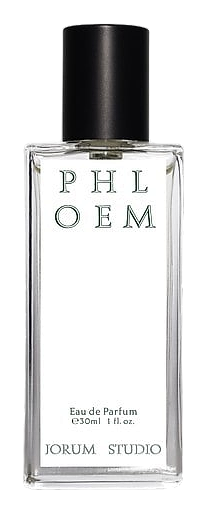
Phloem is named for the plant tissue that distributes nutrients throughout a living organism, the circulatory system of the botanical world. Released in 2019 as part of the Progressive Botany Vol. I collection, the fragrance explores what happens when ingredients that should cancel each other out decide to coexist instead. The result is a fragrance that resists easy categorization, moving through fruity, floral, spicy, and woody territory without ever fully settling in any one place. The composition rewards attention over immediacy, inviting the wearer to discover unexpected harmonies as the scent unfolds on skin. There is an inherent tension in the structure, a push and pull between elements that might seem incompatible at first encounter, yet somehow find their own strange equilibrium.
The note list alone reads like a provocation. Mulberry and passionfruit suggest something lush and tropical; oysterplant and driftwood suggest something maritime and austere. Sesame and ambrette introduce a nutty, almost savory dimension that sits uncomfortably between food and fragrance. On paper, these materials have no business being in the same bottle. What McCall understood, and what separates Phloem from merely eccentric compositions, is that discomfort can be productive. The salt in the oysterplant doesn't fight the fruit; it clarifies it. The sesame doesn't muddy the florals; it grounds them.
The evolution
The opening arrives bright and almost startling, red fruits introducing a saline quality that reads as savory at first, almost culinary. Passionfruit and rhubarb provide the initial tartness, but there's an umami quality underneath that one reviewer compared to fruity cumin. That comparison isn't wrong. The first thirty minutes are the fragrance's most challenging moment, when the various impulses haven't yet found their equilibrium. By the second hour, the florals begin their takeover. Camellia emerges first, waxy, slightly sweet, followed by honeysuckle climbing into the foreground. The saltiness doesn't disappear; it recedes into the composition's architecture, becoming a structural element rather than a dominant note.
Cultural impact
Phloem is a fragrance that refuses to resolve into something easily described or easily worn. It's not a fragrance for everyone, it's a fragrance for someone specific, which is precisely what makes it worth discussing. The fragrance doesn't perform its unconventionality; it simply assumes the wearer is intelligent enough to handle it. The approach offers intellectual rigor without pomposity, oddity without alienating self-consciousness. It's a fragrance that asks something of its audience, and in doing so, finds those capable of meeting it halfway.
The House
Jorum StudioJorum Studio is a Scottish fragrance house that creates scent‑focused objects for a life less ordinary. Based in Edinburgh, the brand mixes everyday humour with a love of nature, delivering modern, poetic perfumes that feel personal and expressive. Each bottle emerges from a small laboratory where the founder‑perfumer blends raw botanical extracts with contemporary techniques, aiming for scents that feel grounded yet playful. The line includes recent releases such as Tessarae (2026) and Monolith (2024), as well as the ongoing Psychoterratica series that began in 2019. Jorum Studio sells through its flagship shop on Saint Stephen Street and a second location in Marylebone, London, inviting visitors to experience fragrance as a tactile, spatial experience.
The Creator
Euan McCallMcCall favors a minimalist palette that lets a single accord breathe. He often builds around a dominant natural note—such as pine, ambergris or violet leaf—and layers supporting ingredients in thin, translucent washes.