
The Story
Why it exists.
The beginning
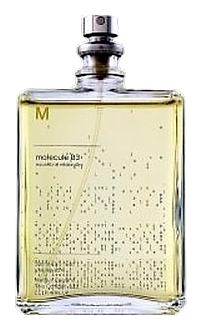
In 2017, Geza Schön asked a deceptively simple question: what happens when you isolate a single molecule and let it speak alone? Javanol, a sandalwood-type molecule developed in a laboratory, had spent years as a supporting player in countless compositions. Schön saw something different: a protagonist. Molecule 04 contains nothing but Javanol. No modifiers, no supporting notes, no distractions. Just the molecule that takes sandalwood into a new dimension. It's the most radical statement in a line already defined by radical simplicity.
Javanol was developed to capture what makes sandalwood compelling, its creamy, warm, slightly pyrazinic woodiness, while amplifying the qualities that make natural sandalwood expensive and ethically complicated. The result is a molecule that retains sandalwood's essential character while being more radiant, more consistent, and more tenacious than anything nature provides. On skin, it doesn't project loudly. It accumulates. It's the kind of presence you notice when someone has been in the room for hours and finally leaves.
The evolution
There is no opening in the traditional sense. Javanol arrives already in conversation with your skin chemistry, skipping the theatrical top note entirely. What emerges is a clean, bright sandalwood that feels almost ozonic, the warmth of wood without the bark, the creaminess without the milk. For the first hour, this quality holds steady, almost challenging you to pay attention to something so quiet. Then the texture deepens. The heart reveals a nutty, almost lactonic quality, the smell of sandalwood's inner bark, rendered in crystalline form. This phase lasts for hours. The drydown is where Molecule 04 becomes yours and yours alone. The Javanol has bonded with your specific skin chemistry, creating something no other wearer will replicate exactly. On fabric, pillowcases, collar, the inside of a jacket, it lingers for days. No projection. No sillage cloud. Just presence.
Cultural impact
Molecule 04 became a case study in the anosmia question: why can some people not smell Javanol at all? Science points to genetic variations in olfactory receptors, but the effect on wearers is polarising. Those who can smell it report exceptional longevity, a full workday and then some. Those who cannot are baffled by the devotion of those who can. It's a fragrance that functions almost as a test: of skin chemistry, of openness to synthetic materials, of patience with fragrance orthodoxy.