
The Story
Why it exists.
The beginning
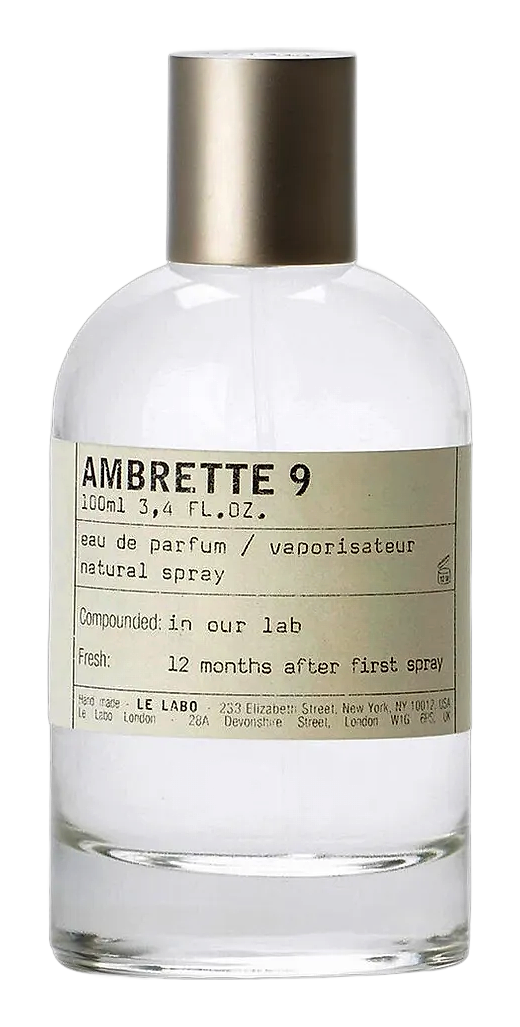
Le Labo built a house on imperfection and the handmade. Ambrette 9, released in 2006, is one of their quieter experiments, a fragrance constructed around a single unusual material: the ambrette seed. Michel Almairac identified it as a botanical oddity worth centering an entire composition around. Not a bestseller waiting to happen. Not a statement piece. Just a perfumer following a material down an interesting road.
Ambrette seed occupies an unusual niche in perfumery. It's one of the few natural sources of musk, but unlike animal-derived musks, it carries a faint fruity, nutty warmth that reads almost like pear skin left in sunlight. Almost floral. Almost sweet. Almost warm. Almairac didn't try to correct this ambiguity. He built a fragrance that lets the ambrette be exactly what it is: a plant pretending to be skin, skin pretending to need no perfume at all. The aldehydes and citrus keep it bright. The amber keeps it grounded. Nothing fights.
The evolution
The opening arrives fizzing and clean, aldehydes carrying Amalfi lemon like something carbonated, effervescent without aggression. No slow build here. Within minutes the lemon recedes, and what replaces it isn't a second act so much as a settling. The ambrette emerges as a warm, soft pulse, skin-warm, not body-spray-warm. Fruity notes add a quiet nuttiness, like the inside of a shell cracked open in sunlight. Three to four hours in, it becomes intimate almost to the point of invisibility, a skin-musk that reads as bare skin rather than perfume. On fabric, it fades quietly. On skin, it lingers close.
Cultural impact
Ambrette 9 occupies a specific corner of the Le Labo catalog, the one marked 'for people who don't need to be noticed.' It's not a crowd-pleaser in the traditional sense. Its fans tend to be wearers who've moved past projection and sillage as metrics of quality. The fragrance rewards patience and proximity. It works best in warmer months, when its quiet aldehydic-citrus opening can breathe and its intimate drydown can unfold naturally against warm skin. In cooler air, it reads even closer, almost conspiratorial.