The Story
Why it exists.
The beginning
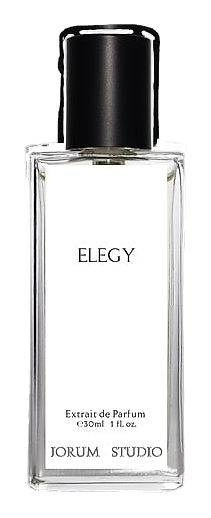
Elegy arrived in 2021 from Jorum Studio's Edinburgh laboratory, the fragrance that asked: what if classic French perfumery had a Scottish conscience? Perfumer Euan McCall built his reputation on botanical precision, years supplying raw perfume oils to other brands before launching the studio proper. But Elegy was personal. The brief wasn't a product brief. It was an idea: rose, jasmine, oakmoss, petitgrain. Then the twist. McCall reached for materials that French perfumery typically treats as supporting players, hay absolute, ambergris, ambrette seed, and let them anchor the florals instead of merely extending them. The result isn't nostalgic. It's how a memory of something beautiful actually feels: imprecise, warm, impossible to shake.
What makes Elegy structurally unusual is the ambrette seed, musk mallow, appearing in both the heart and base. That's unusual. Most fragrances treat ambrette as a bridge material, a way to soften the handoff between floral and woody. Here it does that work twice, which explains why the drydown never feels like a departure from the opening. It feels like the same breath deepening. The oakmoss absolute anchors the whole thing to chypre territory without the darkness you'd expect, more like the moss on a stone wall in late afternoon light than the forest floor. And the hay absolute brings a specificity that rose-and-jasmine alone can't: the smell of something stored, kept, taken out again.
The evolution
It opens bright. Bergamot and petitgrain cut through immediately, clean, green, slightly bitter like the rind of citrus fruit. The lavender arrives fast, herbaceous and familiar, but the honeysuckle slows everything down. That's the first transition: the citrus retreats and the florals take the space it vacates. The white florals, rose absolute, jasmine absolute, French orange flower, don't bloom all at once. They layer. You smell rose, then suddenly jasmine is there too, then you can't separate them and you're in the orange flower entirely. That's the heart, and it lasts. The drydown is where Elegy earns its name. The hay absolute and oakmoss absolute arrive together, earthy, warm, slightly animalic from the ambergris. The cedar absolute and patchouli absolute give it structure without darkness. The oud is subtle; this isn't an oud fragrance. But it's there in the base, the way a memory of a place is there even when you're not trying to remember it. Six to eight hours on most skin. Moderate sillage.
Cultural impact
Elegy sits in a curious position: it's a contemporary fragrance doing things that feel classical without being retro. The powdery-floral template is familiar from mid-century French perfumery, but the materials, hay absolute, ambrette seed, the Scottish-wet greenness of the heather and petitgrain, give it a specificity that separates it from pastiche. Wearers who connect with it tend to describe it in emotional rather than technical terms: memory, comfort, something they can't place. That's unusual in a market where niche fragrances often lead with their strangeness. Elegy leads with familiarity and reveals complexity slowly. It's earned a quiet loyalty among people who don't want to smell like everyone else but don't want to announce that fact either.