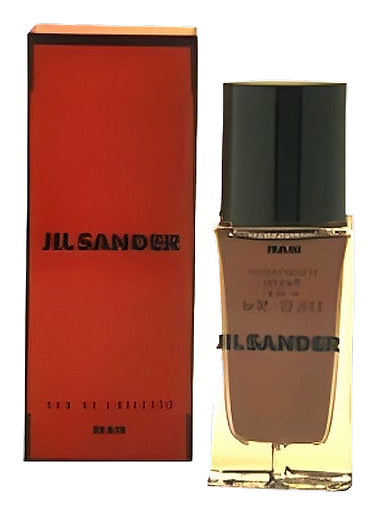

The Story
Why it exists.
The beginning
In 1989, Jil Sander asked a simple question: what does masculinity smell like when you strip away everything performative? Perfumer Alain Alchenberger answered with Feeling Man, a composition built on contrast rather than consensus. Fruit against herbs. Sweetness anchored by tobacco. The result was a fragrance that felt modern for its time, not because it followed trends, but because it refused to.
What makes Feeling Man interesting is its structure. Most masculine fragrances of the era led with power, fougères, heavy woods, animalic base notes that announced themselves from across a room. Feeling Man took a different path: it opened sweet and fruity, with raspberry and aniseed giving it an unexpected brightness, then let herbs and green notes provide the counterweight. By the time the tobacco and oakmoss arrive in the drydown, the fragrance has already made its case. This is confidence that doesn't argue. It's present without being loud.
The evolution
The opening arrives fast, a burst of raspberry sweetness immediately softened by lavender and bergamot. The aniseed peeks through within minutes, giving the top notes an almost edible quality that few masculine fragrances attempt. Geranium and jasmine introduce a cooler, slightly powdery floral note that tempers the sweetness without replacing it. The fir and cyclamen add complexity but never compete for attention. By hour three, the base notes arrive to stay. Oakmoss and tobacco form the backbone, with tonka bean providing warmth and sandalwood lending a creamy finish. The drydown is where Feeling Man earns its reputation, intimate sillage, moderate projection, but a lasting presence that persists through multiple hours of wear.
Cultural impact
Feeling Man sits in an interesting position: discontinued but remembered, neither a blockbuster nor a niche curiosity. The fragrance attracted wearers who wanted scent as an extension of their identity, not a statement they had to make. Its sweet-fruity-tobacco structure offers a different take on masculinity, avoiding the aggressive assertiveness that characterized many masculine fragrances of its era. What keeps it relevant decades later is that restraint hasn't gone out of style. The composition demonstrates that sweetness and depth can coexist, that masculine fragrances don't need to announce themselves to make an impression.