
The Story
Why it exists.
The beginning
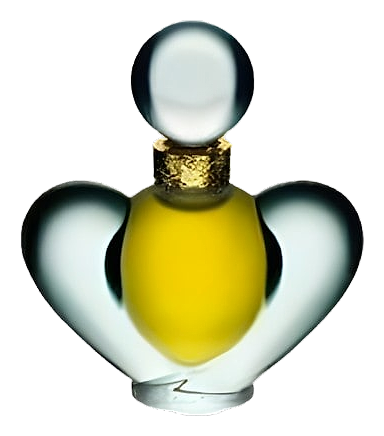
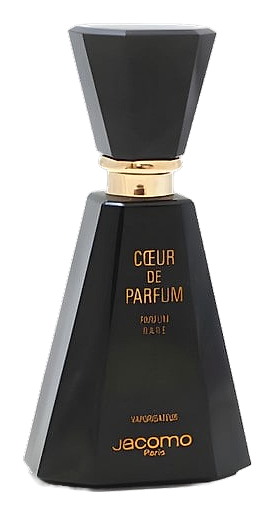
Christian Mathieu designed Coeur de Parfum in 1987 with a clear directive: honor the Chypre tradition without merely replicating it. He kept the architecture intact, bergamot opening, rose-carnation heart, oakmoss base, but introduced warmth through coriander and orris root that gave the structure a fresher, more contemporary feel. The result is a composition that reads as both rooted and forward-looking, a rare balance in perfumery.
The carnation is the quiet engine here. It provides spiced florality without the heaviness of clove or cinnamon, and paired with geranium's aromatic green quality, it creates a mid-section that feels both structured and alive. Coriander adds a subtle citrus-herbal lift that prevents the heart from ever feeling static. The orris root, powdery, slightly violet, offers a smoothness that bridges the florals to the base without tipping into sweetness. Rose is present but not dominant; it supports rather than overwhelms, which is a deliberate choice in a composition built on restraint rather than bloom.
The evolution
The vetiver and labdanum announce themselves early, adding dry and resinous weight before the citrus notes have fully retreated. As the bergamot fades over the first thirty minutes, the carnation takes over, peppery, warm, unapologetic. The rose follows, arriving not as a softening agent but as another layer of complexity, dry and slightly spiced. The oakmoss is the spine that holds everything together, becoming more pronounced as the florals fade. By hour three, the fragrance settles into a warm, woody drydown of sandalwood and patchouli that lasts well into the evening. The sillage moderates after the first hour, becoming intimate rather than projecting, close enough to notice, never loud enough to announce.
Cultural impact
Coeur de Parfum remains relatively under-discussed in contemporary fragrance circles, which is part of its appeal. It occupies a niche for those who already know what a Chypre is, those who remember the era when oakmoss and labdanum were the grammar of serious perfumery. Among its peers, it holds its own for complexity and longevity, though it rarely appears in mainstream conversations about 1980s releases. That quietness is, perhaps, the point.