The Story
Why it exists.
The beginning
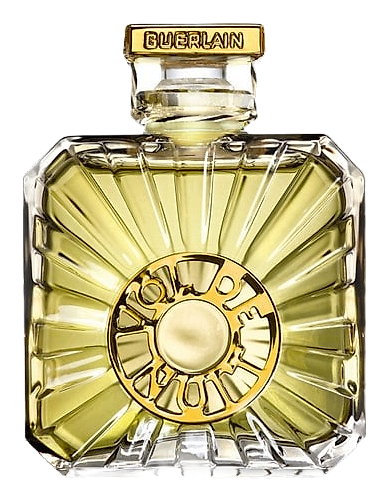
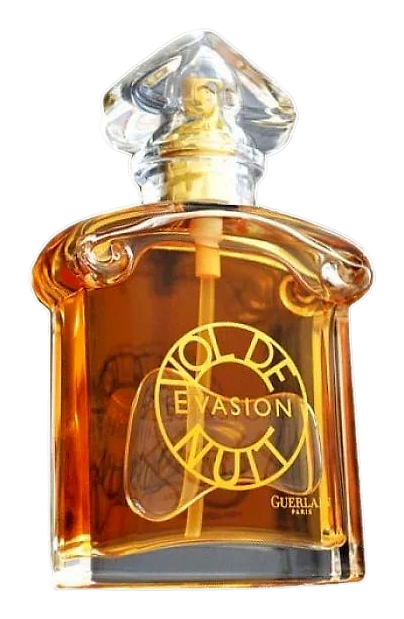
In 1933, Guerlain created Vol de Nuit, a fragrance for women who understood that mystery is a form of elegance. Eighty years later, in 2013, house perfumer Thierry Wasser revisited that original composition with the tools and sensibility of the present. The result is this Extrait: the same green-violet heart, the same mossy foundation, but denser. More resolved. Wasser did not modernize it, he honored it. The collector's bottle, with its gold emblem and restored art deco packaging, is the apology nobody asked for to the vintage devotee who thought they could never own it again.
What makes this composition unusual is the Narcissus at its center, a material most houses avoid for its animalic volatility. Here, it anchors the floral heart between violet's powder and carnation's spice, adding a bitter-green depth that refuses to let the fragrance drift toward softness. The Orris Root in the base behaves differently than in lighter concentrations: less powdery, more like cold stone. Combined with the moss and sandalwood, it forms a drydown that recalls Guerlain's pre-synthetic era, when perfume had to work for its beauty.
The evolution
The opening hits first with galbanum's sharp, almost rubbery green, a shock if you're expecting softness. Within minutes the citruses fade and the violet arrives, powdery and immediate. The carnation then edges in, a wiry spice that lifts the heart. What surprises is the Narcissus: a green-bitter note that doesn't sweeten but deepens, like turning a corner into a darkened garden. By hour two, the moss takes over, damp, earthy, unmistakable. The sandalwood and Orris arrive last, hours in, and this is where the fragrance earns its Extrait designation. The drydown on skin lasts well into the evening. On fabric, it lingers until the following morning, still green, still mossy, still quietly commanding.
Cultural impact
Vol de Nuit 80 Anniversaire occupies a narrow lane: the vintage enthusiast who refused to let an extinct formula stay extinct, and the serious collector who reads the Guerlain catalog the way others read novels. Its collector's bottle, gold emblem, restored deco packaging, signals intent. This is not a fragrance for exploration. It is for the already-convinced, the deeply initiated, the wearer who knows exactly what they want and trusts the house to deliver it without concessions.
The House
GuerlainGuerlain stands as one of the oldest and most revered perfume houses in the world, founded in Paris in 1828 by Pierre-François-Pascal Guerlain. What began as a boutique on rue de Rivoli quickly became the preferred destination for Parisian society, attracting dandies and elegant women who sought custom-crafted fragrances. The house's influence grew to such heights that Guerlain earned the title of Official Perfumer to Napoleon III after presenting Eau de Cologne Impériale to Empress Eugénie as a wedding gift in 1853. This royal patronage marked the beginning of Guerlain's enduring association with European aristocracy, as the house went on to create fragrances for Queen Victoria and Queen Isabella II of Spain. Today, under the creative direction of Thierry Wasser, the fifth-generation perfumer, Guerlain continues to shape the landscape of fine fragrance with a portfolio spanning over 1,100 olfactory creations. The house remains headquartered at its legendary Champs-Élysées mansion, a historic monument that anchors Guerlain's position at the intersection of heritage and contemporary luxury.
The Creator
Thierry WasserWasser gravitates toward green, crispy notes and the bold florals Guerlain is known for. Bulgarian rose appears repeatedly in his work, and he travels annually to oversee the harvest in Kazanlak.