The Story
Why it exists.
The beginning
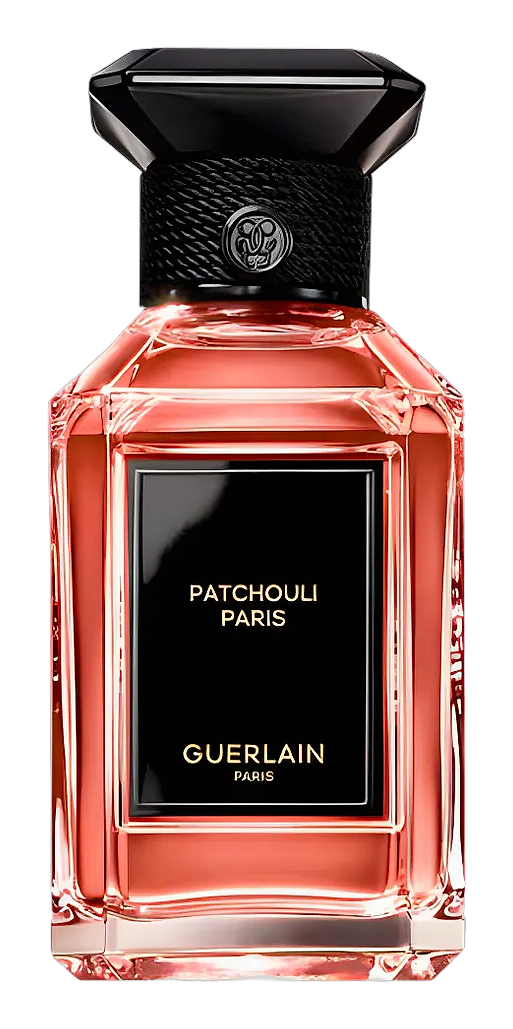
Guerlain has spent two centuries finding new ways to talk about Paris. Patchouli Paris takes on a different angle, the city after the lights warm up, when the capital shows its other face. Delphine Jelk built the fragrance around a tension that should not work: aldehydes and patchouli. The first is crystalline and clean. The second is dark and grounded. The L'Art & La Matière collection has always been where Guerlain takes risks, and this one sits firmly in that tradition.
Aldehydes have been part of the Guerlain vocabulary since the beginning. Patchouli arrived later, borrowed from the counterculture but tamed by the house. Putting them together is not obvious. Iris solves the problem, acting as a bridge between the metallic opening and the animalic base. Vanilla and musk round what could have been jarring into something coherent. The philosophy here is contrast: let the notes fight, then let the skin settle the argument.
The evolution
The aldehydes arrive first, shimmering and metallic, a window into the old Guerlain house style. Within minutes patchouli pushes through, earthy and deep, taking the fragrance in an unexpected direction. Iris follows, powdery and soft, bridging the gap between the cold opening and the warm base. Musk, ambergris, and vanilla complete the arc, turning what started cold into something intimate and lasting. The evolution is not dramatic. It is a slow reveal, each phase arriving without fanfare.
Cultural impact
Patchouli Paris enters the L'Art & La Matière collection as a statement about what Guerlain does best: finding new angles on familiar territory. Patchouli has been in perfumery since the 19th century, Guerlain's own Mitzaore set the template for how this note can be both earthy and elegant. This release takes that history and adds aldehydes, which makes it feel both rooted and fresh. The reception has been strong among enthusiasts who appreciate patchouli done with refinement rather than force. It's not trying to shout. It's trying to be remembered. That distinction matters in a market crowded with patchouli that demands attention.
The House
GuerlainGuerlain stands as one of the oldest and most revered perfume houses in the world, founded in Paris in 1828 by Pierre-François-Pascal Guerlain. What began as a boutique on rue de Rivoli quickly became the preferred destination for Parisian society, attracting dandies and elegant women who sought custom-crafted fragrances. The house's influence grew to such heights that Guerlain earned the title of Official Perfumer to Napoleon III after presenting Eau de Cologne Impériale to Empress Eugénie as a wedding gift in 1853. This royal patronage marked the beginning of Guerlain's enduring association with European aristocracy, as the house went on to create fragrances for Queen Victoria and Queen Isabella II of Spain. Today, under the creative direction of Thierry Wasser, the fifth-generation perfumer, Guerlain continues to shape the landscape of fine fragrance with a portfolio spanning over 1,100 olfactory creations. The house remains headquartered at its legendary Champs-Élysées mansion, a historic monument that anchors Guerlain's position at the intersection of heritage and contemporary luxury.
The Creator
Delphine JelkJelk builds compositions around contrast and tension—warm, round, and inviting, yet never soft. Her signature leans heavily on iris, musks, and powdery facets that give her work a distinctive texture, like cashmere caught in amber.