
The Story
Why it exists.
The beginning
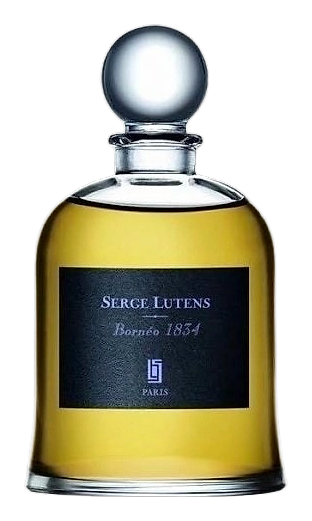
Borneo 1834 takes its name from an island associated with patchouli cultivation and aromatic materials. The reference serves as a point of departure for a fragrance that explores the raw character of patchouli. Christopher Sheldrake, who has composed much of the Lutens catalogue since 1992, worked with this material in an unexpected way, stripping away the polished associations that patchouli often carries in perfumery. The result is a scent that places the ingredient in unfamiliar territory, where it reads as something earthier, darker, and less refined than the familiar version found in contemporary fragrances.
The answer lives in the cacao. Not milk chocolate, but something deeper, with a bitterness that doesn't rely on sweetness. Labdanum anchors the composition, keeping it from floating into something merely pleasant. The combination is unusual: patchouli combined with chocolate but never truly edible, a fragrance that refuses to be merely decorative. There's an earthiness to the base that grounds everything, and a warmth that suggests something old and rooted rather than something manufactured.
The evolution
It opens dark. Not in a bad way, dark like the smell of a room with heavy curtains, like the memory of somewhere warm and enclosed. The patchouli and cacao arrive together, indistinguishable at first, then slowly separating as the fragrance unfolds. For the first hour, this is dense, almost challenging. Then labdanum surfaces, bringing warmth that smooths everything out, maintaining the richness and presence without the earlier demands. By hour six or seven, it settles into a warm, slightly sweet drydown that lingers at the edges. On some skin, this becomes something more intimate. The evolution isn't dramatic; it's more like watching something heavy slowly find its rest.
Cultural impact
Borneo 1834 occupies an unusual position in the Serge Lutens catalogue. It's the fragrance that patchouli skeptics return to when they want something that goes deeper, and patchouli lovers seek out when they want more than the usual interpretation. The scent avoids being merely decorative, projecting a character that is dense and weighted from the start. Those who wear it describe it as something that makes a statement without announcing itself, a presence that arrives and settles rather than announces and retreats.