The Story
Why it exists.
The beginning
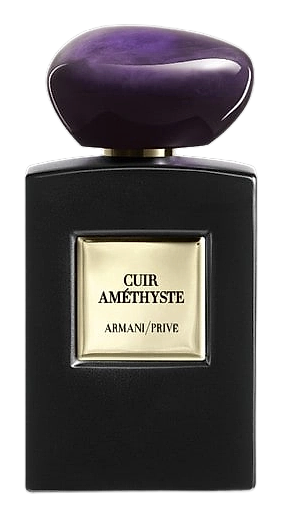
In 2005, Michel Almairac designed Cuir Amethyste for the Armani Privé collection, the house's most refined lineup, where each fragrance is stripped down to its essential materials. The concept was simple on paper: leather and violet. But the execution asked a quieter question. Instead of a fragrance that announced leather, Almairac built one where the leather arrived soft. The violet arrived first, with its powder and its quiet authority, and the leather followed, not commanding, but present. Bergamot and coriander opened the composition, rose going candied at the edges, so that when the birch smoke arrived it felt like a hand reaching back rather than a door slamming shut. This was leather for people who wanted depth, not a statement.
The structure is what makes it unusual. Most leather fragrances lead with the leather, bold, animalic, immediate. Cuir Amethyste does the opposite. The top notes (bergamot, coriander, candied rose) exist specifically to soften the leather's arrival. They create a buffer, a sweetness, a brightness, so that when the birch smoke and violet arrive in the heart, they're not fighting the wearer, they're settling into them. Patchouli anchors the middle with its earthy depth, but the real movement is between powder and smoke. Violet carries a natural dustiness that blends with birch's smoky leather character. It's this interplay that makes the heart feel like one continuous gesture rather than a series of transitions.
The evolution
The opening is citrus-bright, bergamot cutting through, coriander giving it an herbal lift, the candied rose arriving sweet and almost edible. Thirty minutes in, the violet takes over. Not sharply, softly, with its powder leading the way, and the birch smoke arriving just behind, giving the violet something to lean against. The leather isn't absent; it's woven into the smoke, made smokier rather than animalic. This is where it earns its reputation as a floral leather rather than a pure leather fragrance. The patchouli keeps things grounded but never heavy, earthy without going dark. Then the base arrives: benzoin's resinous warmth, vanilla's persistence, labdanum's dry balsamic edge. The leather, by now, has become almost transparent, less a material and more an impression. On skin, this lasts eight to ten hours. On clothing, longer. The next morning, there's a faint warmth where it was applied, vanilla and something soft, like memory.
Cultural impact
The fragrance won two FiFi Awards for packaging in 2007, one for women's prestige, one for men's, recognizing the bottle's architectural minimalism. But the scent itself quietly earned its place as a reference point for a certain kind of leather fragrance: one that leads with softness rather than assertion. It's the fragrance people recommend when someone wants depth from leather without the animalic weight. The 2005 launch placed it in a moment when the leather genre was dominated by bold, smoky compositions, Cuir Amethyste offered something different: powder over smoke, violet over hide.