The Story
Why it exists.
The beginning
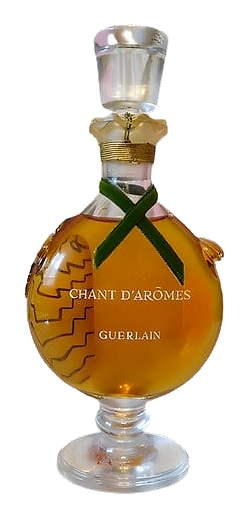
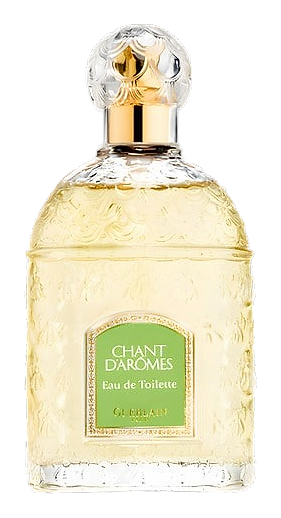
Jean-Paul Guerlain composed Chant d'Aromes in 1962 as a study in lightness. The name itself, Chant d'Aromes, the song of aromas, suggests something lifted, almost effortless. The fragrance opens with aldehydes that shimmer and sparkle, creating a bright impression that feels clean and immediate. Beneath this effervescence, honeysuckle brings a gentle honeyed warmth that softens the crispness without weighing it down. The florals that follow, gardenia and rose among them, emerge with a waxy elegance that feels deliberate rather than heavy. There is an ease to this composition, a quiet confidence that doesn't need to shout to be felt. The scent simply exists, present without being demanding, like something that knows its own worth and doesn't need to announce it.
What makes Chant d'Aromes interesting within Guerlain's catalogue is its use of aldehydes in a way that goes beyond simple vintage characterization. The aldehydes here don't just add shimmer, they create space, allowing each floral element to exist with clarity rather than dissolving into a single sweet blur. The honeysuckle, jasmine, and ylang-ylang breathe independently, each one asserting its own character before gently intertwining with the others. It's an approach that requires restraint, and restraint is what Guerlain does best.
The evolution
The opening arrives bright and clean, aldehyde sparkle softened immediately by honeysuckle's honeyed warmth. Citrus oils lift the composition into something immediate, almost fizzy, with a plum note adding quiet fruit depth beneath. The transition to the heart reveals jasmine and ylang-ylang, their waxy, tropical sweetness tempered by clove's subtle spice. The florals layer rather than compete, each one distinguishable before merging into a warm, cohesive heart. Gardenia adds its own waxy elegance, contributing to the impression that each floral breathes independently within the composition. The base is where Guerlain's signature settles in. Sandalwood brings cream, benzoin brings warmth, vanilla brings a soft amber embrace. Vetiver adds that particular Guerlain depth, not animalic, not dark, just unmistakably grown-up. The sillage stays intimate throughout.
Cultural impact
Chant d'Aromes has found its audience through the decades precisely because it wears lightly while still communicating Guerlain's distinct sensibility. It serves as an accessible entry point to the house, soft enough for everyday wear, but complex enough to reward attention. The floral-chypre structure appeals to those who want Guerlain's signature depth without heaviness, and its moderate longevity keeps it comfortable for professional and casual settings alike. The aldehydic brightness combined with layered florals creates something that feels both timeless and effortless, a fragrance that invites discovery without overwhelming the senses.
The House
GuerlainGuerlain stands as one of the oldest and most revered perfume houses in the world, founded in Paris in 1828 by Pierre-François-Pascal Guerlain. What began as a boutique on rue de Rivoli quickly became the preferred destination for Parisian society, attracting dandies and elegant women who sought custom-crafted fragrances. The house's influence grew to such heights that Guerlain earned the title of Official Perfumer to Napoleon III after presenting Eau de Cologne Impériale to Empress Eugénie as a wedding gift in 1853. This royal patronage marked the beginning of Guerlain's enduring association with European aristocracy, as the house went on to create fragrances for Queen Victoria and Queen Isabella II of Spain. Today, under the creative direction of Thierry Wasser, the fifth-generation perfumer, Guerlain continues to shape the landscape of fine fragrance with a portfolio spanning over 1,100 olfactory creations. The house remains headquartered at its legendary Champs-Élysées mansion, a historic monument that anchors Guerlain's position at the intersection of heritage and contemporary luxury.
The Creator
Jean-Paul GuerlainJean-Paul Guerlain's style resists easy categorization, though richness and depth define nearly every composition. He favored opulent oriental structures, warm woods and resins, and florals treated with almost sculptural precision.