The Story
Why it exists.
The beginning
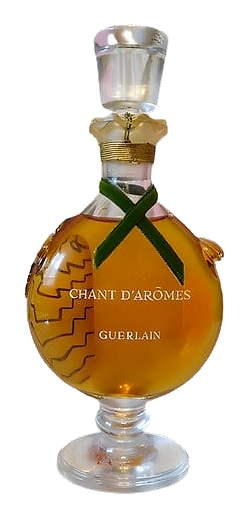
Jean-Paul Guerlain released Chant d'Arômes in 1962 as his first major women's fragrance. The name itself evokes a musical composition, notes woven together rather than simply lined up. It was a debut that reflected Guerlain's approach to fragrance creation, focused on craft rather than chasing trends. The composition draws from a rich palette of floral and fruity notes, creating something that feels both structured and natural. What emerged was a fragrance that balanced brightness with depth, capturing a sense of garden freshness and floral warmth in equal measure.
The composition follows Guerlain's classical architecture: aldehyde lift at the opening, a rich floral heart, a mossy base. What makes Chant d'Arômes distinctive is the mirabelle, a plum variety that adds a fruity sweetness you don't expect in a 1962 chypre. It keeps the aldehydes from feeling clinical, the florals from feeling heavy. The frankincense in the base is quiet, more resinous whisper than church incense. It's the detail that makes the drydown feel earned rather than inevitable.
The evolution
Aldehydes open bright and soapy, that classic sparkling lift. Gardenia arrives shortly after, not the tropical kind, but actual white flower. The mirabelle adds a fruity sweetness to the composition. The heart blooms with honeysuckle and ylang-ylang together creating something warm and honeyed, jasmine adding depth, rose softening the edges. As the green quality softens, moss and vetiver emerge, then heliotrope and benzoin, a soft warmth that stays close to the skin. Vetiver and frankincense linger into the drydown, quiet earthiness that holds without announcing itself.
Cultural impact
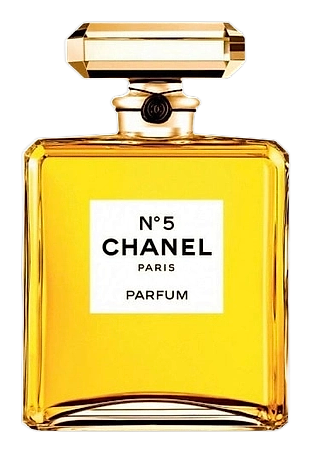
Chant d'Arômes holds a special place as Jean-Paul Guerlain's first major women's release from 1962. It belongs to the tradition of aldehydic florals, alongside references like Chanel No. 5. It's aldehydic but not aggressive, polished but warm. The fragrance offers a sophisticated alternative within this classic category.
The House
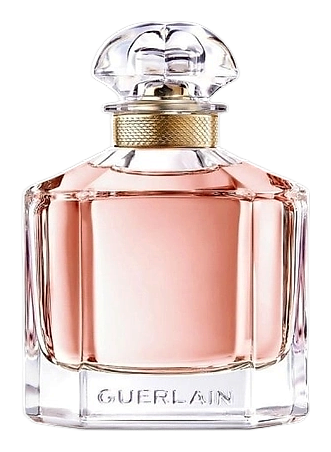
GuerlainGuerlain stands as one of the oldest and most revered perfume houses in the world, founded in Paris in 1828 by Pierre-François-Pascal Guerlain. What began as a boutique on rue de Rivoli quickly became the preferred destination for Parisian society, attracting dandies and elegant women who sought custom-crafted fragrances. The house's influence grew to such heights that Guerlain earned the title of Official Perfumer to Napoleon III after presenting Eau de Cologne Impériale to Empress Eugénie as a wedding gift in 1853. This royal patronage marked the beginning of Guerlain's enduring association with European aristocracy, as the house went on to create fragrances for Queen Victoria and Queen Isabella II of Spain. Today, under the creative direction of Thierry Wasser, the fifth-generation perfumer, Guerlain continues to shape the landscape of fine fragrance with a portfolio spanning over 1,100 olfactory creations. The house remains headquartered at its legendary Champs-Élysées mansion, a historic monument that anchors Guerlain's position at the intersection of heritage and contemporary luxury.
The Creator
Jean-Paul GuerlainJean-Paul Guerlain's style resists easy categorization, though richness and depth define nearly every composition. He favored opulent oriental structures, warm woods and resins, and florals treated with almost sculptural precision.