
The Story
Why it exists.
The beginning
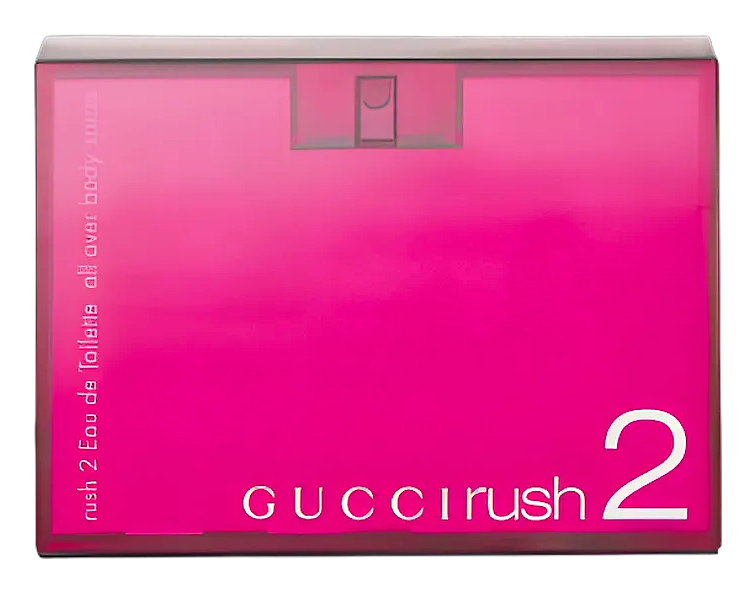
Gucci Rush Summer arrived in 2003 as a seasonal companion to Rush, the 1999 original built around peach and patchouli. Michel Almairac, the perfumer behind the flanker, composed a fragrance that retained the original's bold character while shifting toward a sheerer, more diurnal register. The result moved away from Rush's chypre intensity into a floral-woody construction designed for warmer months rather than after-dark wear. It was a limited release, never intended as a permanent fixture in the lineup, and its scarcity has shaped how it is perceived since production ended.
Almairac's approach to Rush Summer involved a deliberate reduction in density. Where the original Rush relied on a peach accord and patchouli for its weight, Rush Summer strips back to bergamot, freesia, gardenia, and rose, supported by a softer musk-and-woody base. The gardenia carries much of the composition, that white floral with a creamy, almost buttery character that reads as skin-warm rather than bouquet. The woody notes and musk anchor it just enough to prevent the composition from disappearing entirely into sheer floral water.
The evolution
The first fifteen minutes belong to the bergamot, a quick flash of brightness that lifts the composition into the air like a window thrown open. Within thirty minutes, the gardenia arrives in full force, creamy and tropical, edged by the cooler green of freesia and the soft warmth of rose. It reads sheer, almost gauzy, the way white flowers behave in humid air. By the two-hour mark, the florals begin to recede into a skin-close blend of musk and woody notes, warm but understated. The drydown is intimate, the kind of scent that lives on fabric and hair rather than demanding space in a room. What remains after five or six hours is a soft, woody musk, barely there but still recognizable, like the memory of a flower rather than the flower itself.
Cultural impact
Rush Summer occupies an unusual space in the Gucci lineup: a seasonal flanker to one of the brand's most recognizable fragrances, produced in limited quantities and eventually discontinued. It was created during an era when summer flankers were common across mainstream fragrance, released as a warm-weather complement to a heavier, more substantive original. Wearers tend to describe it as nostalgic, summery, and surprisingly wearable despite its age. The fragrance sits firmly within the gardenia-driven white floral category that defined much of early-2000s perfumery, and that period placement gives it a distinctly dated charm.