
The Story
Why it exists.
The beginning
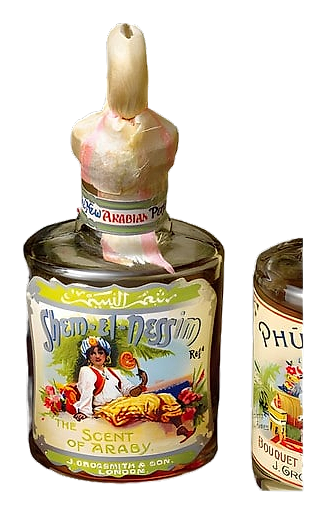
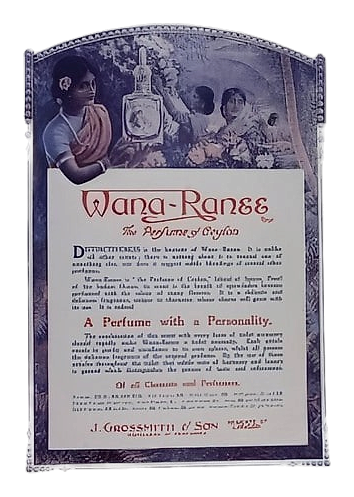
Wana-Ranee arrived in 1914, placing it within an early 20th-century British perfumery context shaped by fuller, more exotic floral compositions. The name carries a connection to Ceylon, where Grossmith held established associations, and the fragrance was marketed as 'The Perfume of Ceylon.' That marketing framing points toward a specific geographic identity rather than a broad regional reference. Production was reportedly discontinued, which makes surviving bottles a quiet kind of archive, small physical records of a moment when the house was reaching toward something distinct from the lighter florals that preceded it.
What sets Wana-Ranee apart is its three-way conversation: citrus brightening the top, a floral heart delivering weight, and an oriental base adding depth without smoke. Surviving descriptions call out citrus, floral, and oriental facets together, a structural choice that feels carefully composed. The citrus keeps things from going heavy, the florals carry the central body of the composition, and the oriental accord stays warm rather than resinous, rounding out the base without dominating the final hours.
The evolution
Wana-Ranee opens bright and confident, the citrus facet snapping awake before anything else has a say. Then the florals take over, fuller and more present than you'd expect from a bottle that's been quiet for over a hundred years. Fifteen minutes in, the composition has settled into something warm and close, the oriental base rising gently under the petals rather than competing with them. It doesn't shout. It doesn't need to. The drydown is where this one wins its long game: a soft, spiced warmth that clings to fabric and skin into the next morning. Coat collar at noon, scarf by evening, still faintly there the next day. On a wool sweater the drydown holds remarkably well; on bare skin, a quieter close presence that stays close to the body rather than drifting outward. The fragrance ages the way good paper ages, gaining character rather than losing it.
Cultural impact
Wana-Ranee by Grossmith occupies a distinctive place in the history of English perfumery. The fragrance was marketed as 'The Perfume of Ceylon,' a designation that places it within the broader context of British interest in Ceylon during the early 20th century, an era when colonial trade routes and cultural exchange brought Ceylon into closer contact with British commerce and aesthetics. That framing shapes how the scent was positioned, both as a luxury object and as an evocation of a specific place.