
The Story
Why it exists.
The beginning
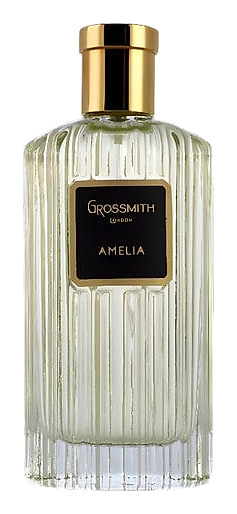
Amelia exists as a fragrant echo of a family history. The fragrance was composed by Trevor Nicholl and released in 2012, named for Amelia Brooke, née Grossmith, daughter of John Grossmith, described as the founder. Where many fragrances chase spectacle, Amelia turns inward, drawing on a personal connection rather than spectacle. Named for the woman whose memory shaped what the house would become, Amelia carries a quiet, intentional weight. It's a composition that honors its namesake through craft rather than noise, the kind of release that feels more like a private gesture than a public announcement. The name itself does the storytelling, anchoring the scent in something specific and real rather than something invented for market appeal.
Nicholl built the composition as a study in restraint. The top notes stay narrow: neroli and osmanthus, chosen for their transparency rather than their volume. The neroli opens bright and almost green, lifted by the osmanthus's dried-apricot warmth, an unusual pairing that earns the space it's given. The heart pulls from classical white florals: rose, peony, jasmine, anchored by amber that gives the composition its quiet gravity. That amber doesn't shout; it holds the florals together, lending them a soft golden undercurrent that keeps the bouquet from drifting into sweetness.
The evolution
The first ten minutes belong to the neroli. Bright, almost green, with the osmanthus threading underneath like dried apricot caught in citrus. There's nothing shy about the opening; it announces itself clearly but doesn't crowd the room. The neroli has that just-picked quality, slightly bitter at the edges, the way orange blossom smells before the flower fully opens, and the osmanthus rounds it out with a leathery fruit warmth that keeps the citrus from going sharp. By the thirty-minute mark, the neroli steps back and the rose takes its place, but it's a specific rose: not jammy, not powdery, closer to fresh petals than to a florist's wrap. The peony softens the edges, lending a cool watery quality, and jasmine adds just enough warmth to keep the composition from going cold.
Cultural impact
Amelia sits in a specific corner of the fragrance world: the heritage floral. It wears like a private reference, the kind of scent someone picks because it feels right rather than because it's loud. There's a particular pleasure in wearing something that doesn't broadcast itself, something that rewards closeness rather than distance. Amelia does that, settling into the skin in a way that becomes more personal the longer it wears. It belongs to the category of fragrances that feel chosen rather than bought, the kind of decision that says something about the wearer's taste without having to announce it.