The Story
Why it exists.
The beginning
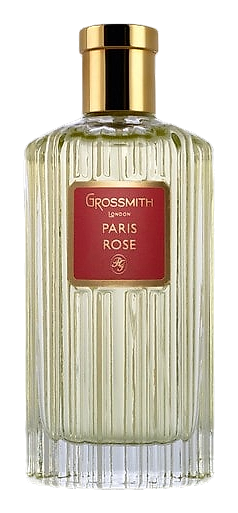
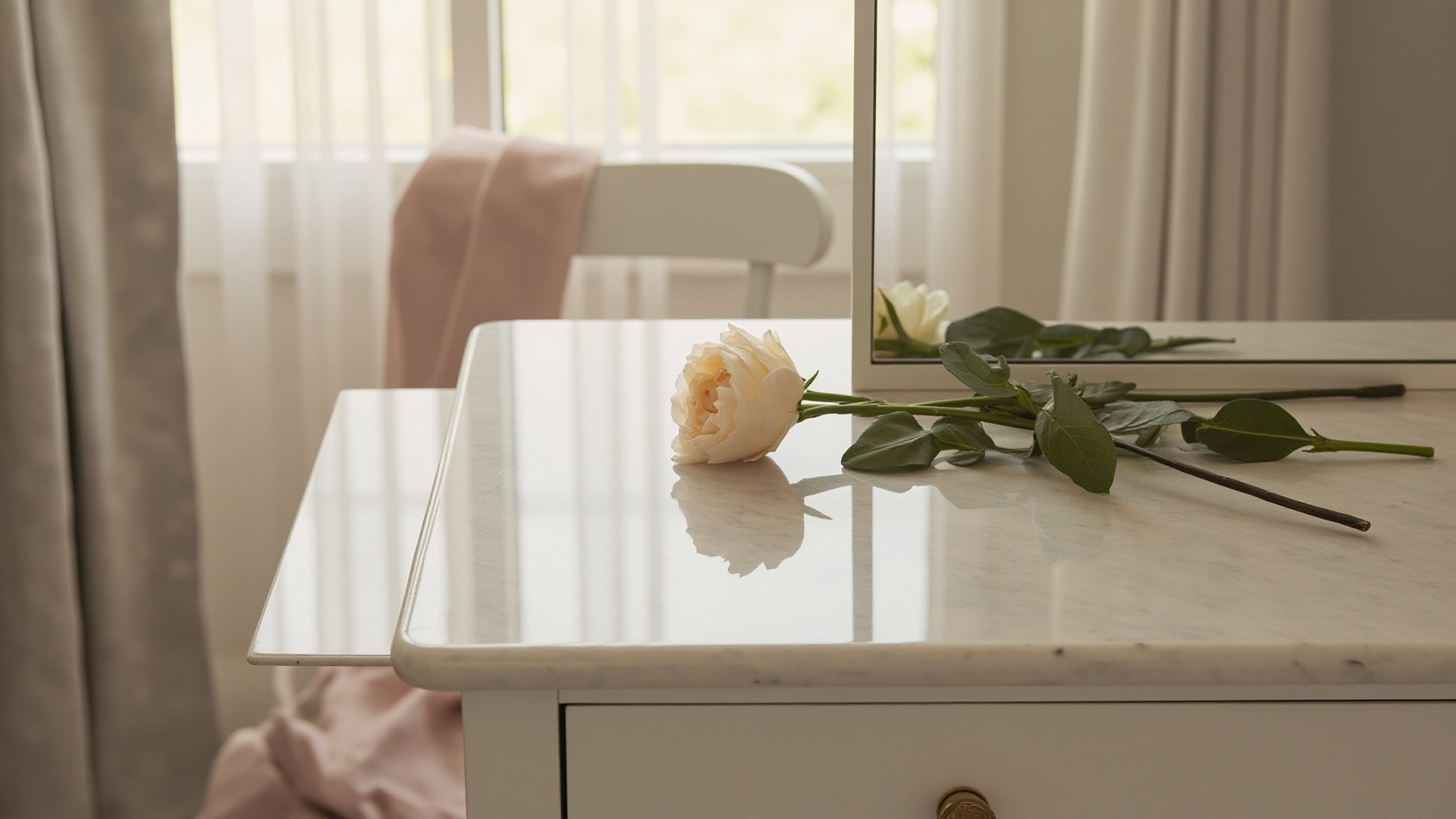
Paris Rose arrived in 2016 from the work of Céline Guivarc'h, a perfumer working within Grossmith, one of Britain's oldest surviving fragrance houses. By 2016 the house was reintroducing itself with compositions that drew from its heritage without slipping into museum-piece stiffness. Paris Rose fit that brief, offering a contemporary floral that carried the house's classical restraint while speaking to a generation fluent in powdery, skin-close compositions. What the name evokes is less a city than a sensibility. The composition reads as rose worn the way Europeans have worn it for generations: refined, powdered, slightly faded into memory. Guivarc'h built the scent around that feeling rather than any literal geography.
What makes Paris Rose structurally interesting is how little it does. The pyramid is almost ascetic: rose appears twice, bookending the composition with peony on the entry and vanilla-sandalwood-musk on the exit. There's no fireworks, no surprise accord, no modern molecular twist. It's a study in restraint, and that restraint is the point. The amber in the heart is the only non-floral voice in the middle register, and it does the work of five louder materials.
The evolution
The first 20 minutes belong to peony, cool and slightly green, like the stem-scent of a fresh-cut bouquet held just below the nose. Then rose folds in, fuller than you'd expect from such a quiet opening, and the two florals braid together into something that reads almost like face powder, soft, rounded, faintly sweet. Around the 90-minute mark the amber surfaces. It's warm and resinous but never heavy, more the hum of a radiator in an old apartment than the glow of a candle. The vanilla arrives not as dessert but as a whisper of cream in coffee, skin-adjacent sweetness that never crosses into gourmand. The drydown, hours later, is where this fragrance earns its longevity. Sandalwood and musk take over, and what remains is surprisingly intimate. On fabric the next morning: clean linen, a trace of warmth, the ghost of rose. On skin, something closer to bare skin warmed by amber, faint but present. It doesn't project after hour four. It doesn't need to.
Cultural impact
Paris Rose sits in a quiet corner of the fragrance world, the kind of powdery rose that vintage perfume lovers and modern minimalists both reach for without quite agreeing on why. It occupies a register that feels inherited rather than invented, wearing its influences so lightly that they read as instinct. On the right skin the composition blooms into something almost edible in its softness: the rose deepening, the peony gaining a faintly suede-like warmth, the vanilla coming forward as the hours pass until the whole scent reads like the inside of an old wooden jewelry box. It rewards patience and proximity.