The Story
Why it exists.
The beginning
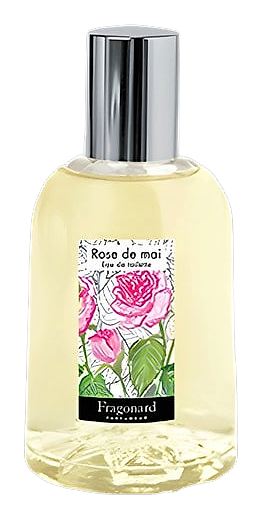
The scent was born from memory. Jean-Claude Ellena returned to the centifolia harvest of Grasse, the same fields where he once helped his grandmother as a child, and decided the fragrance should carry that specific feeling. Not nostalgia exactly. Something more like an old photograph that still smells like summer. The Les Parfums de Grasse collection already carried this burden of heritage, being rooted in a city whose perfume knowledge earned UNESCO World Heritage status in 2018. But Ellena chose to honor that weight with the thinnest possible veil of material. Rose absolute at the top. That was the entire brief.
The pyramid holds just four materials, rose absolute, geranium, immortelle, and musk. Four. In an era when extrait de parfum can run to forty notes, that's nearly a philosophical statement. But the rose absolute does not behave like a single ingredient. It opens cool and dewy, with the green-stem smell that is the only honest signal of authenticity, not the potpourri sweetness that most rose perfumes mistake for richness. Geranium brings a clean herbal lift that keeps the whole thing from sitting flat. Immortelle, the Corsican flower sometimes called helichrysum, adds a honeyed warmth that rounds the heart without ever turning heavy.
The evolution
It opens at full concentration. Rose absolute in its coolest register, dewy, green-stemmed, the kind of freshness that belongs to a field before the sun clears the hill. That clarity holds for the first hour, clean and unsentimental. Then the geranium arrives, not to compete but to deepen the green, and the immortelle's honey-tobacco warmth starts building underneath. The rose doesn't fade. It gains body. By the third hour, this is a rose with shoulders, a rose that has weight and herb and the faintest animal warmth from the musk as it warms against skin. The drydown is where it earns the name. The rose doesn't disappear into the base. It settles inside the musk and stays there, close and intimate, a memory of petals rather than petals themselves. Six to eight hours, always close. You smell it. The room doesn't.
Cultural impact
Rose De Mai arrived in 2019 carrying the weight of Grasse's UNESCO designation, which had been awarded the year before. The timing placed it at the intersection of heritage preservation and modern minimalism, a fragrance that did not argue for complexity but let four materials do what forty could not. Ellena's name brought the kind of credibility that niche houses rarely access: the man behind Van Cleef & Arpels First, behind the entire Hermès Jardin series, lending his hand to a four-material rose extract. That tension, the master at his most restrained, is what wearers discuss most. It is not a safe rose. It is an honest one.