
The Story
Why it exists.
The beginning
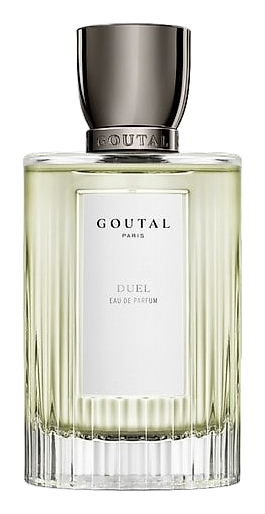
Goutal was never about loudness. The house built its name on personal storytelling, Annick Goutal writing with fragrance as a way of capturing moments. The brand's catalogue reads like a diary of gardens, travels, and memories kept like pressed flowers. Camille Goutal, Annick's daughter, now carries that legacy forward. Duel arrived in 2003, co-created by Camille Goutal and Isabelle Doyen. The name is the concept: two forces locked in tension, neither yielding. The fragrance translates that duality into smell, freshness against depth, green against leathery, the bright citrus of petitgrain against the bitter earth of mate leaves. It's a confrontation. But Goutal being Goutal, the confrontation has poetry.
What makes Duel unusual is the mate note. In perfumery, mate, the leaf of the yerba plant, remains uncommon, sitting somewhere between tea and tobacco but with a bitterness that neither admits. Here it appears in the opening, working alongside petitgrain to create an initial impression that reads more herbal than sweet, more mineral than warm. Petitgrain opens bright but doesn't retreat politely. It stays present through the heart, keeping the composition green and sharp even as absinthe and orris root layer in.
The evolution
The opening hits sharp and green, petitgrain's citrus-bitter bite paired with mate's herbal edge. The fragrance announces itself with confidence. Then absinthe arrives, bringing a quiet medicinal quality that tames the brightness without killing it. The orris root surfaces gradually, adding a powdery softness that seems to contradict the green sharpness, and for a while, the two coexist in tension. Leather takes over as the fragrance develops. It doesn't arrive dramatically. It settles. The green fades. The absinthe softens. What remains is a warm, close-to-skin presence of leather, musk, and guaiac wood. The drydown becomes intimate, a quiet leather warmth that stays. On fabric, the guaiac wood can linger longer than on skin, where the wear time varies depending on skin chemistry and application.
Cultural impact
Duel presents itself as an aromatic-woody composition that rewards attention rather than demanding it. It speaks to those seeking something distinctive without being obvious, something that feels personal rather than performed. The mate note gives it a point of differentiation that still reads unusual today. It's not a crowd-pleaser by design, which is probably why it appeals to those who found it.