
The Story
Why it exists.
The beginning
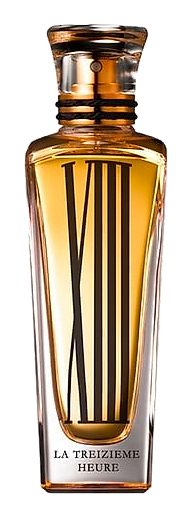
The thirteenth hour is the one that arrives without warning. For Cartier, XIII carries a specific weight: the number marks 13 Rue de la Paix, the Maison's historic Paris address where generations of collectors have crossed the threshold expecting something extraordinary. In 2009, as Cartier marked a century of its fragrance arm, perfumer Mathilde Laurent composed the final chapter of the Les Heures de Parfum collection, a quintet of numbered moments, each capturing a different hour with its own character. XIII was designed as the culmination: the hour when seduction becomes inevitable, when the careful distance maintained all day finally collapses. Laurent reached for materials that could carry that weight, leather, smoke, and something warm enough to explain why someone would lean closer than they planned.
What makes La Treizième Heure XIII distinctive is the birch. Not the delicate birch of Nordic landscapes, but birch rendered through heat, the tarry, smoky intensity that arrives like a struck match held too close. It's paired with mate, the South American tea that carries both bitterness and a green, herbal lift, preventing the composition from becoming a single dark note. The leather doesn't arrive immediately; it builds as the smoke softens, layering with patchouli's earth and vanilla's warmth into something that reads as skin-close rather than theatrical. The bergamot in the opening is the Cartier signature, bright, precise, a flash of light before the room goes dim.
The evolution
The opening announces itself without apology. Birch smoke dominates, sharp, tarry, the smell of embers held too close. Bergamot flickers beneath it, a brief citrus lift that prevents the arrival from feeling brutal. Mate adds a green herbal dimension, almost medicinal, like walking into a tobacconist's back room where the air is thick with cured leaves and woodsmoke. Thirty minutes in, the smoke begins to settle. Leather emerges, not polished leather goods but something rawer, animalic, the kind that has absorbed years of wear. Patchouli grounds it with earth. Vanilla begins its slow rise, sweetening the darkness without erasing it. By the second hour, the composition has transformed into something warmer and closer. The smoke never fully disappears; it recedes into the drydown, becoming the memory of a fire rather than the fire itself. Vanilla and leather hold the skin for hours after, intimate and persistent, the kind of drydown that someone notices only when they're already leaning in.
Cultural impact
La Treizième Heure XIII completes the Les Heures de Parfum collection, five numbered hours, each a different moment in time. Mathilde Laurent created all five initial compositions, with XIII positioned as the final, most seductive chapter. The collection draws from Cartier's jewellery heritage, treating each fragrance as an intimate accessory rather than a statement piece. The number XIII carries specific weight for the Maison: 13 Rue de la Paix is Cartier's historic Paris address, where the story of the house has unfolded for generations.
The House
CartierFrom a small Parisian workshop in 1847 to one of the most celebrated fragrance houses in the world, Cartier has spent over 175 years translating the language of precious gems into something you can wear against your skin. Every Cartier fragrance is conceived as invisible jewellery, an intimate ornament that speaks to the same desire for beauty and craftsmanship that has drawn royalty and connoisseurs to the Maison for generations. The panther prowls through its scent wardrobe, diamonds catch light in crystalline bottles, and rare ingredients arrive from distant corners of the globe. This is luxury in its most wearable form.
The Creator
Mathilde LaurentMathilde favors a restrained palette that highlights natural essences. She often begins with a clear mineral or green base, then layers luminous florals such as jasmine or orange blossom.