
The Story
Why it exists.
The beginning
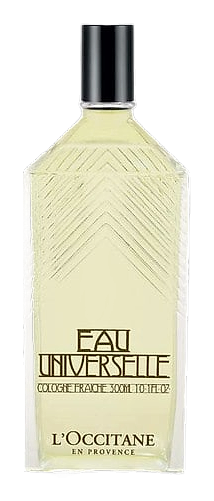
L'Occitane released Eau Universelle in 2012 as part of a three-fragrance collection called Eaux de Provence, presented at the Perfume Expo in Dusseldorf. The concept was simple: a cologne that could work for anyone, anywhere, without asking questions. Mathieu Nardin designed it around bright citrus, bergamot and grapefruit, that opened immediately and didn't complicate things. The name said it all. This was fragrance as universal language, not niche statement.
What makes Eau Universelle interesting isn't what it has, it's what it doesn't. Three top notes, one heart note, one base note. That's it. The structure is almost diagrammatic: citrus opens, geranium softens, woody notes settle. No fireworks, no dramatic arc. Just clarity. For a major house like L'Occitane, this restraint is notable. The brand could pile on complexity. Instead, Nardin kept it honest. The geranium is the quiet unexpected element here, it adds a slightly herbal, almost medicinal undertone that keeps the citrus from feeling like a generic household cleaner.
The evolution
Eau Universelle opens bright. Bergamot and grapefruit arrive together, sharp and sparkling, like citrus peel just broken. There's no waiting period, the scent announces itself immediately and just as quickly begins to soften. Within twenty minutes, geranium moves in, adding a green herbal counterweight that takes the shine off the grapefruit. It becomes less juice, more leaf. The woody base doesn't arrive so much as emerge, slowly, quietly, giving warmth without weight. By hour two, you're leaning into your own wrist to catch what's left. That woody warmth sits close to the skin for another hour before fading entirely. The arc is clean: bright, soft, quiet. Then gone.
Cultural impact
Eau Universelle fits into L'Occitane's broader positioning around accessible, honest fragrance, not revolutionary, but grounded in Provençal identity and botanical tradition. The 2012 launch reflects an era when major houses were releasing lighter, more versatile colognes as alternatives to heavy, projection-focused fragrances. The collection's three-pronged approach, Eau Ravissante, Eau Universelle, Eau Captivante, offered different expressions of the Provençal citrus ideal without demanding complex interpretation from the wearer.