
The Story
Why it exists.
The beginning
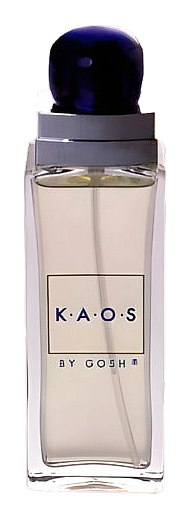
The name said everything. In 1990, when Gosh released KAOS, the brand was already two decades into a philosophy that fragrance should announce itself without apology. KAOS arrived with intention, the spelling itself a provocation, a rejection of legibility in favor of something you had to experience to understand. It wasn't trying to please. It was trying to be remembered.
What makes the composition work is its refusal to resolve cleanly. The citrus-fruity opening pulls you in with something bright and accessible, but the heart, jasmine, violet, lily of the valley, introduces a powdery tension that doesn't play nice with expectations. By the time the sandalwood and cedar arrive, you've been through three different fragrances disguised as one. That's the trick. That's what keeps people coming back.
The evolution
The opening lands sharp. Black currant and tangerine hit together, Amalfi lemon lifting the whole thing skyward for the first twenty minutes. Then the florals arrive, jasmine first, then the cool green of lily of the valley, violet threading through like a whisper you almost miss. The drydown is where KAOS earns its reputation. Sandalwood and cedar settle warm against the skin, moss adding that unmistakable 1990s depth, and if you've worn it long enough, you'll find it on your collar the next morning, faint, close, unwilling to fully leave.
Cultural impact
KAOS arrived at a moment when Indian fragrance houses were beginning to compete on the world stage, offering complexity and boldness at price points that made experimentation accessible. The 1990s chypre structure, that citrus-fruity opening giving way to powdery florals and deep mossy base, positioned it alongside Western designer releases of the same era, while the Gosh philosophy of uncompromising sillage gave it an edge that stood apart.