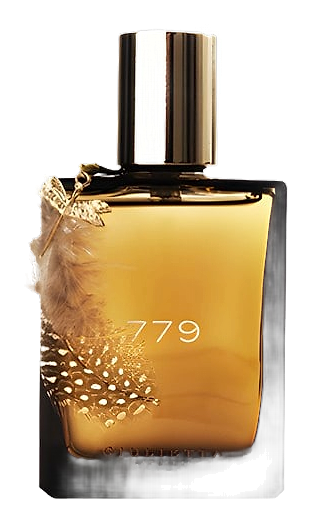

The Story
Why it exists.
The beginning
779 takes its name from a number, not a place or person, and that ambiguity is the point. Giulietta Capuleti builds perfume from literature and memory, but 779 is the exception: an abstract composition, a code for something harder to name. The house wanted to explore what happens when a fragrance carries no narrative burden, only sensation. Released in 2015, it arrived in the collection between Bugia Bianca and Ballo in Maschera, two deeply story-driven scents, and it deliberately stands apart. No tragic heroine here. Just a formula that refuses to explain itself.
What makes 779 work is the tension between its opening and its end. Six top notes, citrus and pepper in near-equal measure, create a first impression that reads as cool, almost detached. But the heart introduces artemisia and Bigarane, an aromatic that adds a bitter, almost medicinal edge no one expects after the bright start. The rum deepens the complexity, lending a warmth that the citrus threatened to deny. By the time cashmere wood and sandalwood arrive, the fragrance has shifted registers entirely: intimate, powdery-soft, the kind of base that stays close to skin rather than announcing itself across a table.
The evolution
The opening announces itself for roughly thirty minutes, a crisp, almost sharp blend of pink pepper, bergamot, and grapefruit that feels more Italian aperitivo than perfume counter. Then the hand-off: the citrus recedes, juniper and rose de Mai take over, and the artemisia introduces a dryness that shifts the mood toward something quieter, more interior. The drydown is where 779 earns its reputation for intimacy. Cashmere wood and vanilla arrive late, around the four-hour mark, and stay. On fabric, the base notes can linger into the next day, faint and warm. On skin, expect six to eight hours of close wear, moderate sillage that never demands attention but rewards those who lean in.
Cultural impact
779 occupies an unusual position in the Giulietta Capuleti catalogue: it's the only fragrance without an explicit literary or narrative hook. Where Ritorno Amaro evokes bitterness and homecoming, and Soul Drops reaches for something spiritual, 779 asks the wearer to bring their own meaning. This abstraction has made it a quiet favorite among those who resist being told what a fragrance should represent. In the broader niche landscape, it sits alongside a cohort of understated Italian compositions, less maximalist than Amouage, less conceptual than some Milanese contemporaries, more interested in comfort than statement. The reception has been consistent: not a fragrance that divides, but one that builds loyalty quietly, over years of wear.