
The Story
Why it exists.
The beginning
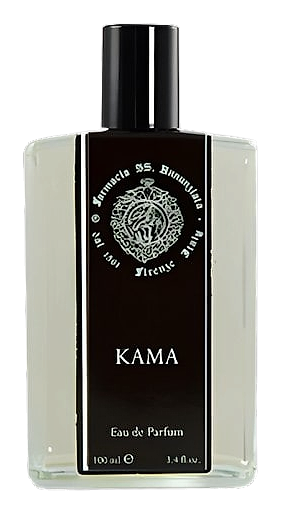
Kama arrives from Farmacia SS. Annunziata, a Florentine house with the date 1561 carried in its name. The composition reads as a study in restraint: a floral-oriental built on petitgrain and pink grapefruit at the opening, rose and rice powder at the heart, and a base of vanilla and amber with patchouli lending its weight to the foundation. The citrus top reads sharp and unsweetened, the kind of brightness that announces itself without lingering. As it settles, the rose never turns jammy and the rice powder never turns sweet, it simply folds into the skin with that dry, starchy softness that defines the composition's character.
What makes Kama worth a second look is the rice powder note sitting in the heart. Rice powder is a quiet material in Western perfumery. It brings a dry, starchy softness, almost like the residue of sun-warmed skin after a bath. Pairing it with dog rose and patchouli gives the composition its tension: the powder wants to float, the patchouli wants to root. The result is a floral heart that never tips into soapy or sweet.
The evolution
Kama opens the way a confident introvert enters a room. Petitgrain arrives first, carrying that bitter-green lift, then pink grapefruit brightens the edges without shouting. The opening feels almost like a cologne, clean and herbal, with the citrus reading mineral rather than juicy. Then something shifts. Rose and rice powder move in, softening the citrus into something warmer, almost talcum-like. The patchouli keeps the whole thing honest. It keeps the powder from drifting into sweetness, holds it close to the skin. As the hours pass, the vanilla and amber take over. The drydown is where Kama earns its reputation for intimacy. It stays within a moderate radius, projects without demanding space, and lingers on clothes long after the skin has gone quiet. On skin, the wear is generous.
Cultural impact
Kama finds its place among powdery florals and clean orientals, a category where restraint does more work than projection. The rice powder heart is what sets it apart from anything sitting on the mainstream shelves. Seeing it here, paired with patchouli and dry vanilla, gives Kama a texture that feels distinctive without being experimental. It belongs to the kind of wear that lives close to the skin, that asks the wearer to lean in rather than broadcast. The composition doesn't chase the gourmand sweetness that has dominated recent releases, nor does it lean into the heavy amber style of classic orientals.