
The Story
Why it exists.
The beginning
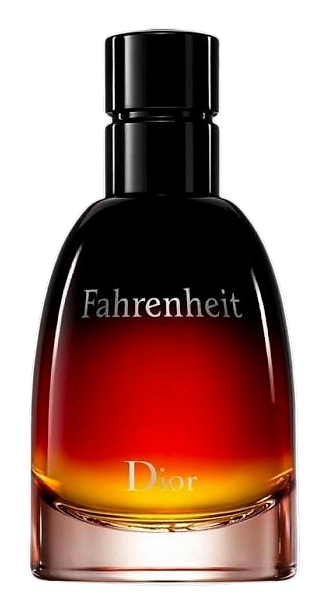
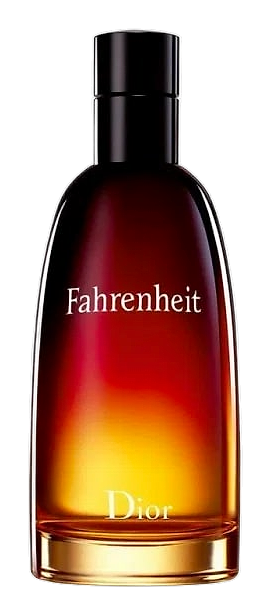
1988. Fahrenheit was a men's fragrance that broke the mold. The brief went to Maurice Roger and Jean-Louis Sieuzac, two perfumers who composed something unconventional: what if a men's fragrance could combine violets and new leather at once? The name itself, a temperature, a unit of measurement, hinted at something engineered rather than grown. From its launch, Fahrenheit announced that the category of masculine scent could be expanded beyond the conventions everyone had taken for granted. It was a structural gamble, layering floral material into a base traditionally reserved for woody, leathery compositions. The perfumers treated cool violet leaf as a leading note rather than a supporting accent, then anchored it with a leather and patchouli foundation.
What makes Fahrenheit structurally unusual is the way floral and fuel coexist without one canceling the other. Violet leaf gives the opening a green, almost watery coolness that has no business sitting next to the warmth of nutmeg, cedar, and leather. Roger and Sieuzac refused to pick a single lane. The violet accord reads almost metallic in the first ten minutes, then softens into something unexpectedly tender as carnation and honeysuckle surface. Underneath, the leather and patchouli base does the heavy lifting, but it never lets the composition collapse into pure smoke.
The evolution
The first 15 minutes are loud. Bergamot and mandarin give a brief citrus lift, but the violet leaf and mace move fast, sharp and almost metallic. Don't mistake it for fresh. It's bracing. By the 30-minute mark the florals surface: jasmine, honeysuckle, carnation, layered against nutmeg that warms from underneath. The violet cools the whole thing down. Around the two-hour mark the leather arrives, real leather, not a hint, supported by sandalwood and a smoky vetiver. From hour four onward you're in the drydown: tonka bean, amber, musk, patchouli, the whole composition settling into something woody and warm that clings to fabric. On a wool scarf the next morning, it's still there, faded but unmistakable.
Cultural impact
The petrol-violet-leather combination read as confrontational in 1988, and it still does. It holds up because it refuses to update itself. The original remains the reference point for anyone interested in leather-driven masculine perfumery. The composition didn't just add a new option to the men's fragrance shelf, it introduced a vocabulary that other houses have returned to repeatedly since. Violet leaf as a structural note, gasoline-adjacent aromatics as a deliberate texture, leather that smells more like a jacket than a saddle: these are moves Fahrenheit put into circulation.