
The Story
Why it exists.
The beginning
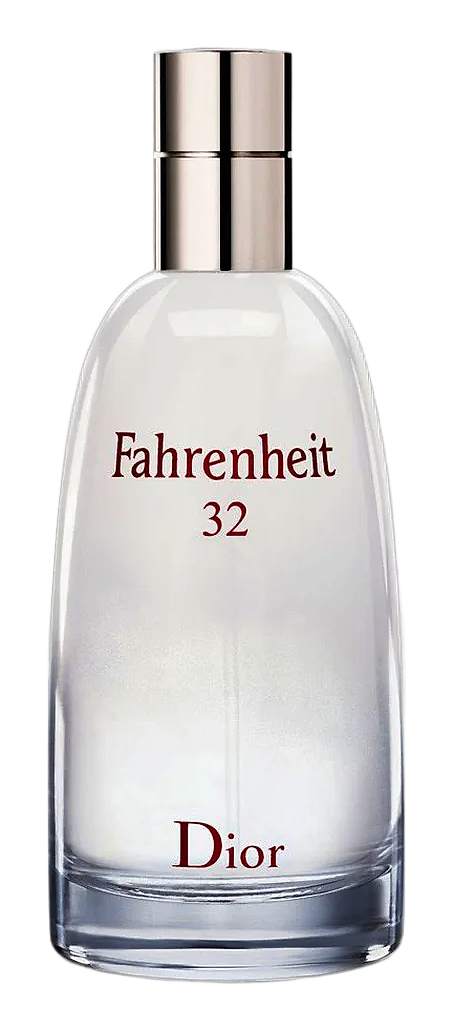
Fahrenheit 32 was launched in 2007 by François Demachy, who at the time was deepening his role as Dior's in-house perfumer. The original Fahrenheit, introduced in 1988 under perfumer Maurice Roucel, had become one of Dior's most recognizable masculine statements, defined by an unconventional gasoline-and-chrome accord that polarized and captivated in equal measure. Demachy understood that the Fahrenheit name carried significant weight, and rather than attempt to recreate the original's audacity, he chose to chart a new course. The number 32 refers to the freezing point of water in Celsius, which is 0 degrees Celsius in Fahrenheit. The name implies a new starting point, a different register entirely.
Demachy's philosophy with Fahrenheit 32 centered on the idea of floral masculinity without cliché. Orange blossom is not a standard masculine opening material, and its inclusion here signals a deliberate departure from conventional gender coding in fragrance. The iris-violet combination serves as the conceptual core, providing a cool, structured heart that justifies the presence of rose and vanilla without becoming decoratively sweet. Vetiver in the base reinforces the masculine register while keeping the composition grounded in Dior's heritage of using rare raw materials. The fragrance ultimately works as a bridge between the original Fahrenheit's boldness and a more refined, contemporary sensibility.
The evolution
The fragrance opens on orange blossom absolute, immediately distinguishing itself from anything the original Fahrenheit wearer might expect. Orange blossom carries a specific character here, one that is waxy and rich rather than sharply citrus, and it persists through the opening minutes before violet and iris arrive to reshape the composition. Iris brings a powdery, slightly metallic quality that pairs naturally with violet's cool, almost mentholated edge, and rose appears quietly to soften the pairing without diluting its character. Vanilla begins to introduce itself around the midpoint, adding sweetness that might feel unexpected in a masculine context, yet it is held in check by the floral structure surrounding it. The drydown is vetiver, which provides the necessary counterweight: dry, smoky, rooty, and masculine enough to close the composition with authority.
Cultural impact
Dior's Fahrenheit 32 arrived in 2007 as an answer to a growing tension in masculine fragrance: the demand for warmth and comfort versus the lingering shadow of the original Fahrenheit's mineral boldness. The original, launched in 1988, had defined a generation's understanding of what a men's scent could be. By the 2000s, that threadbare edge felt dated. Fahrenheit 32 chose another path, leaning into florality, specifically orange blossom, that split audiences. It asked whether a floral men's fragrance could exist without irony or apology. The answer proved divisive, but the question itself marked a cultural pivot.