
The Story
Why it exists.
The beginning
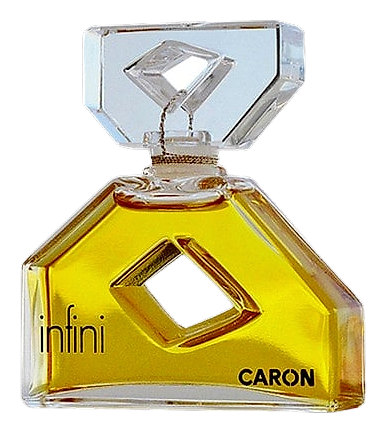
In 1970, the space race still pulsed through the culture. The result was named Infini, not as metaphor, but as direct tribute to outer space. The asymmetrical flacon, hollowed in its center, was designed by Serge Mansau to echo the mathematical symbol for infinity itself. Everything about the fragrance was deliberate: the name a declaration, the bottle a sculpture, the scent a collision of aldehydic brightness with lush floral warmth. The aldehydes burst forth with an immediate sparkling quality, like light catching crystal, while beneath them white florals unfurl in rich, buttery waves. Jasmine and tuberose dominate the heart, their creamy presence softening the initial cool shimmer into something warmer and more intimate.
The aldehydic-floral structure places Infini squarely in a tradition Caron had helped define decades earlier, but the 1970 formulation pushed the white florals higher, jasmine and tuberose at the heart give it a creaminess that offsets the aldehydes' initial coolness. The vetiver and sandalwood base grounds the powdery iris and lilac in something warm and close. There's a interplay between bright and deep throughout the composition, the aldehydes lifting while the florals add richness, the base woods providing a smooth, enveloping foundation.
The evolution
The opening is pure aldehyde, waxy, sparkling, almost metallic. It's the smell of something new hitting warm skin. Within minutes the florals take over: jasmine first, then the quieter entrance of lily of the valley. The transition is graceful, not abrupt. The heart holds iris and lilac, and here the fragrance shifts from bright to powdery. Tuberose lingers in the background, adding a tropical creaminess that prevents the drydown from reading as austere. By hour four, the base arrives: sandalwood and tonka bean, with vetiver keeping everything grounded. Musk holds closest to the skin, and if you wear it to bed, the amber and tonka will still be there in the morning, softened, intimate, almost second-skin.
Cultural impact
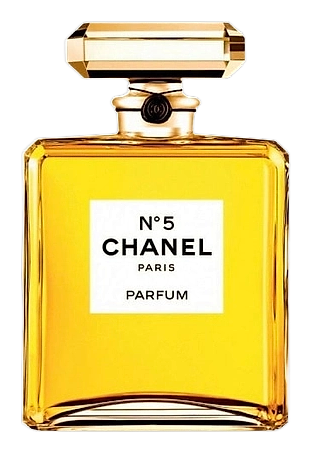
As a 1970 release, Infini arrived at a moment when the aldehydic-floral structure was well-established, Chanel No.5 had set the template decades earlier, but Caron's execution brought a particular warmth and creaminess that distinguished it. The space-age naming and sculptural bottle placed Infini firmly in its era, a perfume that wanted to be modern. The fragrance opens with a luminous aldehydic sparkle that quickly gives way to a rich heart of white florals, jasmine and tuberose creating a creamy, enveloping presence that feels both luxurious and grounded.