The Story
Why it exists.
The beginning
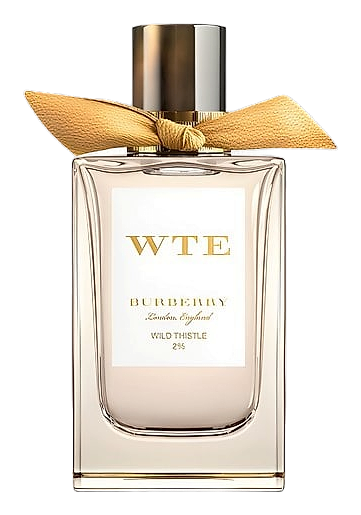
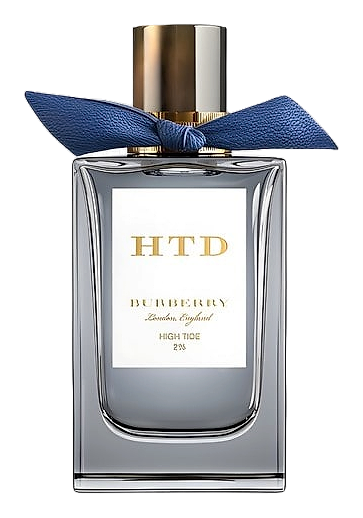
In 2017, Burberry tapped Francis Kurkdjian for something outside the expected register. High Tide wasn't meant to be another clean, ozonic breeze. The name is the brief: the moment the water reaches highest, pulls back, and leaves everything it touched changed. Kurkdjian built it from the bottom up, starting with oakmoss rather than ending there. The result is a marine scent that remembers where it came from. It trades the usual poolside sparkle for something wilder, older, and harder to shake. The opening carries a briny sharpness, the kind of cold salt air that hits before you've seen the shoreline. From there the composition moves through layers of green, vegetal weight, with oakmoss grounding everything in a damp, earthy base that lingers long after the brighter notes have burned off.
High Tide does something less obvious with its marine notes. They carry a vegetal, almost kelp-like bitterness, which is where the violet leaf earns its place. Violet leaf is sharp, green, and slightly metallic. It bridges the gap between the aldehydes above and the oakmoss below like cold seawater filling a rockpool. Then there's Hedione, a jasmine-derived molecule that adds transparency and lift without adding sweetness. This is what keeps the composition from collapsing into something heavy or chypre-dense. The structure is deliberate: bright, then cold, then rooted.
The evolution
The first fifteen minutes are all atmosphere. Aldehydes flash like a camera going off, sharp and clean, over a bergamot that reads more like cold peel than citrus juice. There's a mineral edge to it that feels less like perfume and more like a change in air pressure. By the thirty-minute mark, the aldehydes have stepped back and the violet leaf takes the wheel. It's green, slightly peppery, and carries the aquatic notes on its shoulders without ever becoming fully oceanic. Jasmine hides in the middle, creamy and soft, doing just enough to keep the composition from feeling sterile. The heart phase holds for a solid three to four hours. Then the oakmoss arrives. It doesn't sneak in. It just is. Dark, earthy, slightly bitter, and unmistakably present. The drydown reads closer to a walk through wet forest than a day at the beach. On fabric the next morning, it's still there, quieter but intact, smelling like damp bark and something floral that never fully left.
Cultural impact
High Tide sits in an unusual place. It was released as part of Burberry's Bespoke collection, available only in physical stores, which gave it a quiet, almost exclusive profile. The cold, mossy character reads as the work of a perfumer who was given room to complicate a simple brief. Rather than chasing trend or pandering to the broadest possible audience, the fragrance leans into its own peculiar logic, a marine scent that refuses to behave like one. The exclusivity of the Bespoke distribution meant it never became a mainstream staple, which in turn has shaped its reputation as something of a quiet discovery for those who stumble across it.
The House
BurberryBurberry fragrances are the olfactory equivalent of their iconic trench coat: quintessentially British, effortlessly elegant, and unexpectedly rebellious. The house translates its rich fashion heritage into scents that feel both timeless and perfectly modern. It's the smell of London—a city of classic architecture and defiant street style.
The Creator
Francis KurkdjianFrancis Kurkdjian's signature style is characterized by a remarkable luminosity and a sophisticated elegance. He often employs a radiant, almost translucent quality in his compositions, even when working with rich or dense materials.