The Story
Why it exists.
The beginning
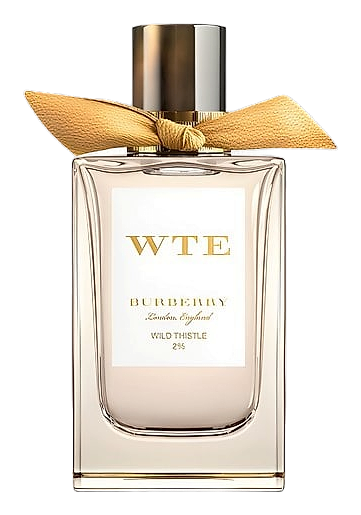
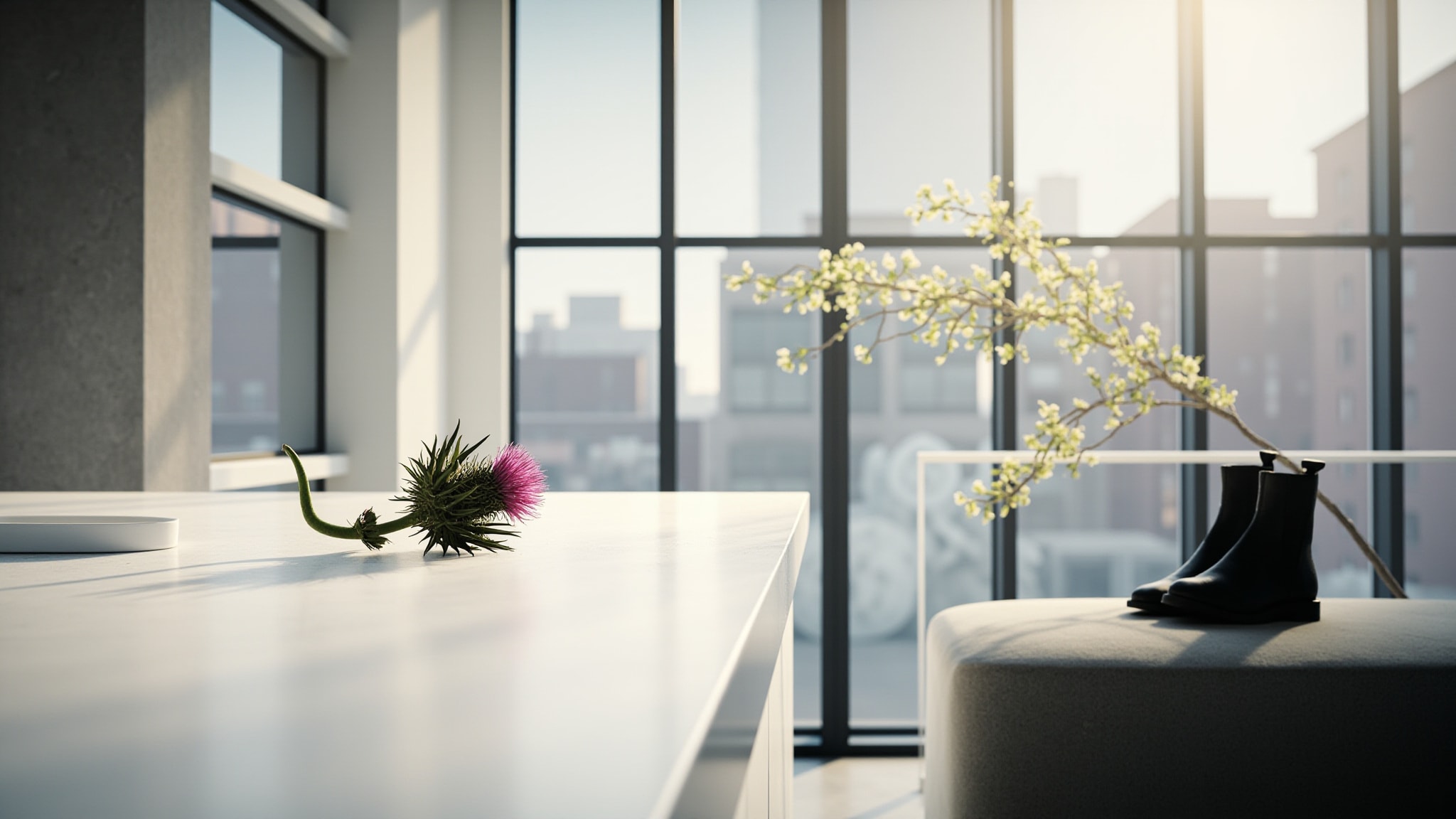
Wild Thistle arrived in 2017 as part of Burberry's Bespoke collection, a series that trades the brand's usual broad-market reach for something more personal, more private. You can't just order it online. It lives inside Burberry stores, offered in adjustable concentrations, tailored to whoever's standing at the counter. That's the whole point. A scent commissioned in the moment, shaped to a specific nose. The name carries its own weight. Thistle, a plant with spines and stubborn roots, the kind that doesn't ask for permission to grow. Wild thistle, then, suggests something that flourishes without cultivation. No pruning. No coaxing. It just shows up, in a hedgerow, in a crack in a wall, and dares you to do something about it. That's the attitude the perfumer was translating into a bottle.
Aldehydes do the heavy lifting at the top, that crisp, soapy brightness that recalls old-fashioned cologne but stripped of the powder. Green notes crash in immediately, and they're not polite. Galbanum is the dominant gesture, a resinous, peppery green that smells like someone took a machete to a bush and bottled the moment of impact. Jasmine and lily of the valley soften the edges without smoothing them out entirely. Geranium adds its rosy, slightly medicinal leafiness, the note that makes the whole composition feel like a garden with a pulse. No gourmand warmth. No smoky undertones. Just green, white, and a bit of an argument.
The evolution
The first ten minutes are almost confrontational. Aldehydes hit cold and fizzy, like seltzer poured over cut stems, and underneath them galbanum rumbles green and sharp. There's a soapy quality that some wearers read as vintage and others read as austere. It doesn't apologize for either reading. Twenty minutes in, the jasmine starts to assert itself. The green sharpens into something more floral without losing its backbone. Lily of the valley adds a cool sweetness, the kind that recalls lilacs in a cold room. Geranium threads through with its herbal, almost mentholated edge. The aldehydes recede but never fully leave. They're the scaffolding. By the two-hour mark, the composition has settled into its quieter register. The greens have mellowed into something woodier, warmer, less aggressive. A diffuse, unspecific woody base anchors everything close to skin. Projection drops. It becomes a scent you lean into, not one that fills a room.
Cultural impact
Wild Thistle sits in Burberry's Bespoke collection, a range that trades mass-market reach for something more intimate. The scents are available only in Burberry stores, in adjustable concentrations. It appeals to wearers who want their florals green and their greens sharp, people drawn to compositions that hold their structure instead of dissolving into something safe and forgettable. It belongs to a category of fragrance that still treats the wearer as a participant rather than a target demographic.
The House
BurberryBurberry fragrances are the olfactory equivalent of their iconic trench coat: quintessentially British, effortlessly elegant, and unexpectedly rebellious. The house translates its rich fashion heritage into scents that feel both timeless and perfectly modern. It's the smell of London—a city of classic architecture and defiant street style.
The Creator
Francis KurkdjianFrancis Kurkdjian's signature style is characterized by a remarkable luminosity and a sophisticated elegance. He often employs a radiant, almost translucent quality in his compositions, even when working with rich or dense materials.