
The Story
Why it exists.
The beginning
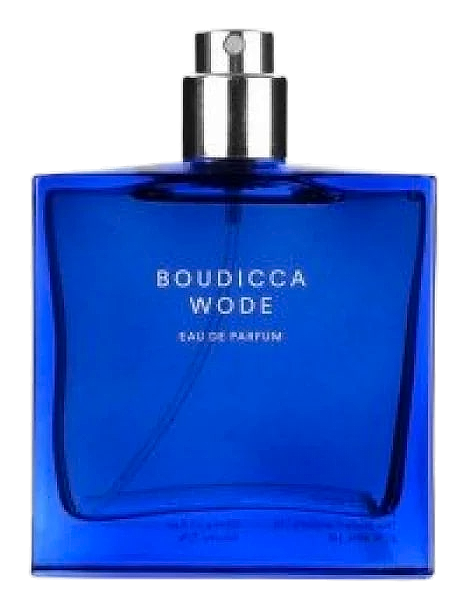
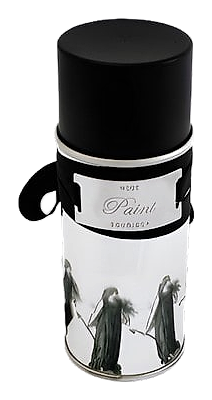
The legend goes that Boudicca, Queen of the Iceni, led her tribe into battle wearing cobalt blue war paint, a visual weapon as much as any blade. The paint was deliberate. Intimidating. It announced her before she spoke. When Roman forces finally defeated her, Boudicca chose her own end: she swallowed hemlock rather than submit. The plant that ended her became part of the fragrance. Not as metaphor. As material. Geza Schön built Wode around that duality, the visual ritual of blue paint, and the botanical that ended a rebellion. The result is a fragrance that performs before it even reaches the nose. The blue pigment gives Wode its name, and the dark botanical gives it its soul, a fragrance that carries the weight of its namesake's final choices.
What makes Wode structurally unusual is the pairing of black hemlock extract with raw opium in the heart. Neither is a decorative note, both carry weight, history, and a certain medicinal gravity that most compositions avoid. Hemlock brings a green, slightly camphoraceous bitterness that cuts through the warmer materials around it. Opium adds a dense, almost narcotic richness that reads as smoky rather than sweet. Together with saffron and tuberose, they form a heart that's luxurious and unsettling in equal measure.
The evolution
The opening hits fast: a salvo of herbal-spicy notes, juniper berry, cardamom, coriander seed, clary sage, tempered by bergamot's citrus brightness and a cool dew-drop accord. It's sharp and green, almost medicinal in the first minutes. Then the heart arrives, and it feels like a different fragrance entirely. The saffron and tuberose bloom into something warm, creamy, and floral, but the cumin and hemlock are still present underneath, a reminder that this wasn't built for comfort. The drydown is where Wode earns its name. Leather and styrax come forward, settling into a smoky, resinous base with blonde tobacco and musk holding everything close to the skin. The hemlock never fully disappears. It's there in the final hours, green, quiet, persistent. On fabric, the tobacco and tree moss linger into the next day.
Cultural impact
Wode arrived in 2008, challenging conventional notions of what a fragrance could reference. A pairing of hemlock and opium reads as a statement of intent rather than a commercial calculation, the kind of material choice that signals artistic ambition over mass appeal. Geza Schön built Wode around narrative materials that most houses would consider too dark or too specific, crafting a fragrance for those who want something with history attached, not just a pleasant scent but one with a reason to exist.