The Story
Why it exists.
The beginning
Pine arrived in 2014 as part of 1907's debut collection, alongside Verbena, Jasmine, Ambrette, and Heliotrope. Founded by Eva Škovranová in Bratislava, the house named itself after the year Neiman Marcus opened, a quiet tribute to retail as a craft. Pine was one of four compositions that established the brand's philosophy: a single botanical idea, explored with restraint. The house described Pine as a portrait of a relaxing day at sea, hand on the helm of a yacht, wind ruffling an open shirt, the mood set for discovery. It is a fragrance built around a feeling, not a place that exists on any map.
What makes Pine worth examining is its chypre architecture dressed in summer clothes. Oakmoss and bergamot form the classic chypre spine, but the house swaps the expected florals for freesia and wraps the whole structure around pine resin and elemi. The result reads fresh and outdoorsy on first spray, then reveals a more deliberate, mossy structure underneath. It is a chypre that forgot to be stuffy.
The evolution
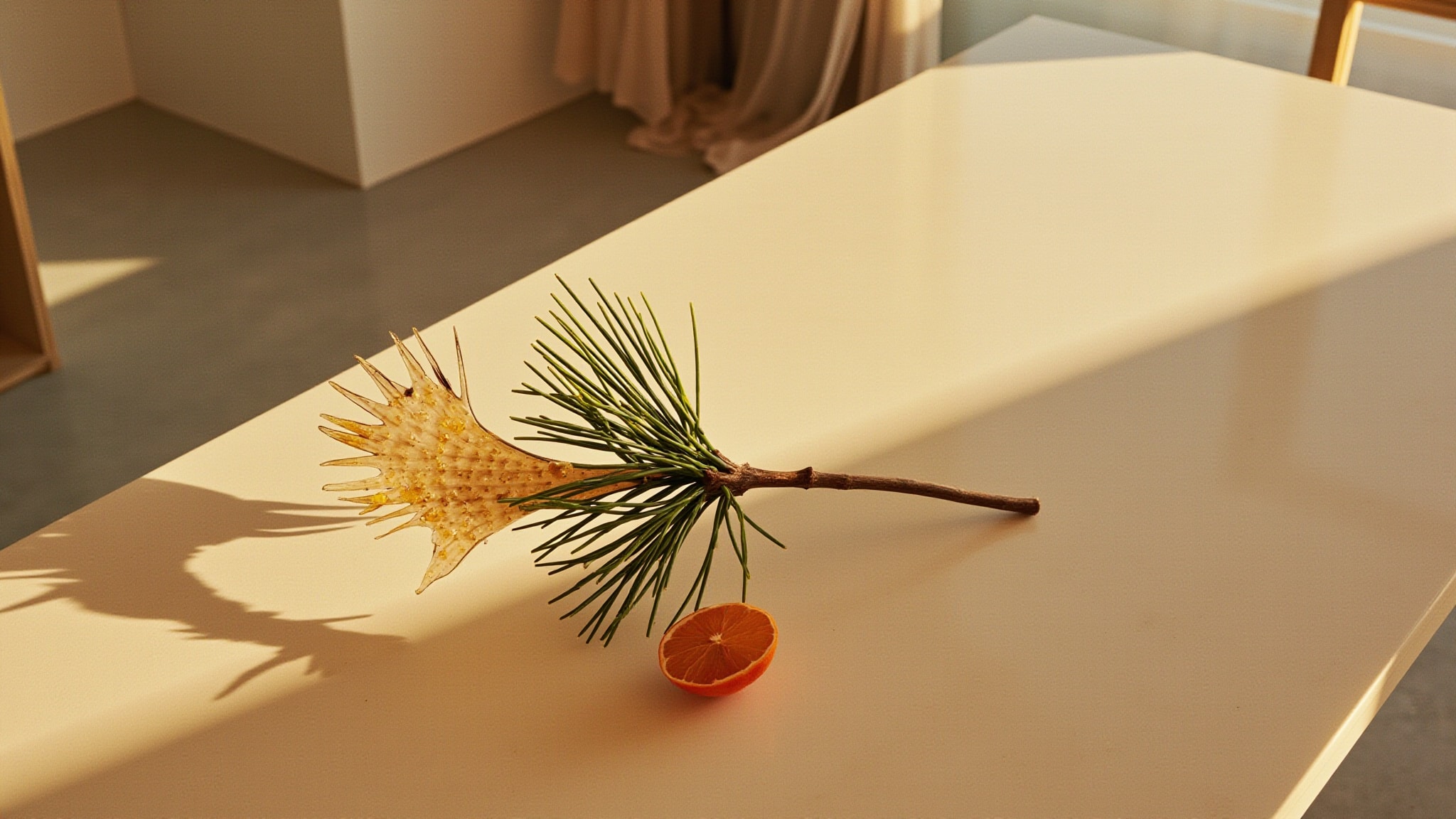
The first fifteen minutes are loud and bright. Pine resin, grapefruit, and Calabrian bergamot hit with a sharp, almost astringent energy, like cracking a green branch in half. The sea notes sit underneath, not as a clean aquatic but as something slightly humid, the smell of water on warm stone. Within thirty minutes, the black pepper and elemi arrive and the composition pivots from sharp to resinous. Elemi adds a lemony, incense-like haze that softens the pine without burying it. Cedar and freesia keep the middle phase from going too dark. The drydown is where Pine settles into its truest self. Haitian vetiver brings an earthy smoke, oakmoss grounds everything with that classic chypre dampness, and Madagascar vanilla arrives quietly, not as sweetness but as warmth. The base lasts through a full workday on most skin, fading into a close, woody-mossy whisper that still carries vanilla and vetiver the next morning on fabric.
Cultural impact
Pine sits comfortably in the conversation around modern chypre revivals, the wave of indie and niche houses reworking a genre that fell out of mainstream favor after IFRA restrictions on oakmoss. 1907's take keeps the classic mossy-citrus spine but swaps the traditional rose-and-jasmine heart for fresher, outdoorsier materials like elemi and freesia. It appeals to wearers who want the sophistication of a chypre without the formality, collectors who value concept-driven compositions from small European houses, and anyone drawn to fragrances that smell like a specific place or moment rather than an abstract luxury idea.