
The Story
Why it exists.
The beginning
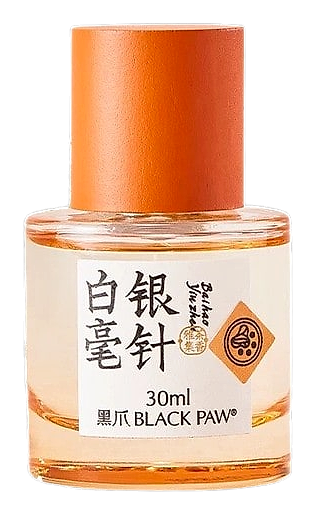
Baihao Yinzhen takes its name from one of China's most revered white teas, Silver Needle. The tea is a study in restraint: a delicate leaf, carrying the flavor of the place where it grew. Black Paw built this fragrance around that same discipline. No excess. No noise. Just the cool clarity of white tea at its most itself, translated into something you can wear. The top notes arrive clean and luminous, a bright crispness that feels like morning light. There's a subtle vegetal quality threading through the florals, keeping everything grounded in something green and real. As it settles, the white tea accord remains the quiet anchor, never shouting, always present.
What makes Baihao Yinzhen work is the way the florals never overpower the tea. Freesia adds a dewy freshness without turning sweet. Pear brings a cool fruitiness that reads more mineral than sugary. Osmanthus and peony arrive later, subtle and slightly honeyed, but the white tea never fully retreats, it lingers in the base like a reference point you keep returning to. The structure is vertical rather than horizontal: it doesn't sprawl across the skin, it rises.
The evolution
The opening is the crispest moment, white tea and freesia arriving together, pear adding a brief coolness before the florals take over. Within twenty minutes, osmanthus and peony emerge, their sweetness tempered by the tea still running underneath. Rose appears alongside these florals, the combination softening the initial brightness into something rounder and more complex. The drydown is where cashmere wood and musk settle close to the skin, leaving a soft warmth that the green notes keep grounded. What unfolds is a progression that feels deliberate, each stage arriving in its own time, never rushed, never forced.
Cultural impact
Baihao Yinzhen belongs to Black Paw's Tea Collection, a series built on specificity rather than generality. Rather than offering a vague 'tea' impression, each fragrance names its variety, this one is Silver Needle, a white tea known for its delicate character. The approach brings a certain rigor to how tea gets translated into scent, grounding the work in something concrete rather than leaving it as mere suggestion. It's a perspective that values precision over shorthand.