
The Story
Why it exists.
The beginning
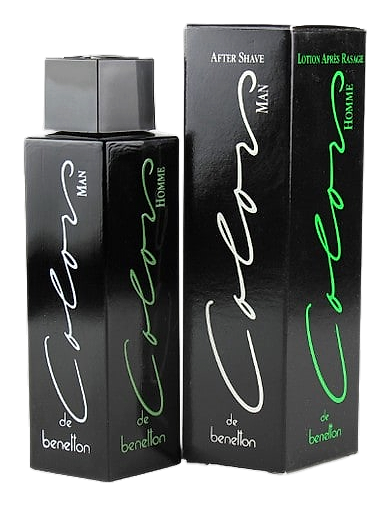
Colors de Benetton Man arrived in 1988 as the masculine counterpart to an already-popular women's scent, extending the brand's chromatic worldview into olfaction. Benetton had built its identity on color, literally, bright pigments in knitwear that disrupted 1970s fashion, so a fragrance line made perfect sense: scent as another shade in the palette. The creative brief asked for brightness that could live on skin, not just in a bottle. Ann Gottlieb approached it as a study in contrast: citrus and green freshness opening into something warmer, woodier, built to last a full day without announcing itself. The goal was never to dominate a room. It was to make the person wearing it feel like they'd already won something.
What makes this composition interesting is the way it refuses the typical masculine structure. Instead of opening sharp and drying down softer, it reverses the expectation, the citrus and lavender arrive crisp and almost herbal, but the base of benzoin, vanilla, and coconut pulls everything into a warmth that feels closer to skin than to sillage. The cypress and cedar in the heart give it backbone without heaviness. Patchouli anchors the drydown without going dark. It's a composition that trusts the wearer to carry it rather than screaming for attention first.
The evolution
The opening hits clean and immediate, lemon and bergamot bright enough to read almost green, with lavender arriving within minutes to soften the citrus bite. Ten minutes in, the heart opens: jasmine and rose over cypress, a floral-woody middle that shifts the fragrance from fresh to warm without ever going heavy. The drydown is where this fragrance earns its reputation, cedar and sandalwood settle close to skin, benzoin and vanilla create a powdery amber warmth that lingers past the six-hour mark on most skin types. The coconut note, if your skin pulls it, adds a slight tropical sweetness to the final hour. What surprises is how the green notes never fully disappear, they stay in the base like a memory of the opening, threading through the drydown until the whole thing fades quietly into skin warmth.
Cultural impact
Colors de Benetton Man occupies a specific moment in fragrance history: the late 1980s, when fashion houses were first translating their visual identities into scent at scale. It arrived alongside a generation of accessible designer fragrances that prioritized wearability over complexity. The fragrance has outlasted most of its contemporaries, remaining in continuous production through decades of reformulation and trend shifts. What keeps it relevant is its refusal to be anything other than what it is, bright, warm, approachable, and lasting. Wearers describe it as the scent of someone who doesn't need to prove anything. It's been compared, favorably, to fragrances costing several times its price.