
The Story
Why it exists.
The beginning
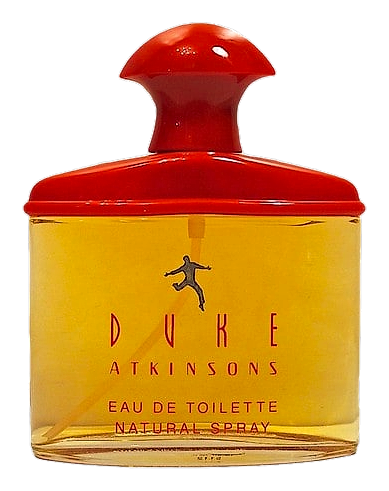
Duke arrived in 1992, a declaration from a house that had been making statements since a teenager rolled into Soho with a bear. The name says something, Duke, and Atkinsons committed to it. Not a subtle fragrance. Not an apologetic one. Seven top notes announce themselves at once: basil, bergamot, rosemary, lavender, anise, artemisia, aldehydes. In 1992, that was a lot. The opening hits like a burst of Mediterranean herbs, with basil and rosemary cutting through the citrus bright of bergamot. Lavender weaves in and out, giving the blend an almost powdery undertone even as the anise adds a sharp, liquorice-like bite.
The structure is worth pausing on. A chypre base of oakmoss, amber, leather, and musk supporting a heart of spruce, geranium, tobacco, and patchouli, that's a traditional masculine architecture, the kind that survived decades before ifen and oakmoss restrictions changed everything. What makes Duke unusual is the top. Seven notes, including aldehydes, a material more common in vintage florals than masculine aromatics. The aldehydes don't amplify the herbs so much as sharpen them. Basil becomes more green, rosemary more medicinal. The aldehydes are the jolt that makes the whole opening feel electric rather than just herbal.
The evolution
The opening hits like walking into a room where everyone's already talking. Seven notes at full volume, basil, rosemary, lavender, anise, artemisia, bergamot, aldehydes, all arriving at once, competing for attention. Within thirty minutes, the aldehydes begin to recede and the herbs settle. The bergamot hangs around longest of the citrus, threading brightness through the green. By hour two, the heart takes over: spruce and geranium create an unexpected cool-green combination, while tobacco adds weight without sweetness. The patchouli keeps the forest-floor sensibility. Hours four through six bring the base. Musk and amber warm things up, cedar adds structure, and then the oakmoss arrives, not loud, but present. The leather finishes things. By hour eight, Duke whispers. Close to the skin. A ghost of what it was. But it was there for the entire workday.
Cultural impact
Duke arrived at the end of an era. Bold, herbal, built on oakmoss and leather, seven notes in the top alone. It was a statement from a house with roots in British perfumery, a fragrance that didn't ask for permission. The fragrance developed a cult following among collectors who understood what a pre-IFRA oakmoss chypre represented. Today, discontinued, it exists as a time capsule, the kind of fragrance you find in a vintage shop and realize was made by people who knew exactly what they were doing. The oakmoss anchors the composition, lending an earthy, forest-floor depth that modern formulations rarely achieve.