The Story
Why it exists.
The beginning
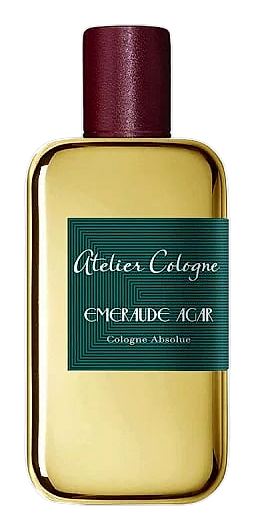
Emeraude Agar was composed by Jérôme Epinette for Atelier Cologne in 2016, built around a tension that most oud fragrances avoid: what if precious didn't mean heavy? The brief seemed to be clean wood, green clarity, and a material, angelica, that most perfumers treat as background noise. Epinette made it foreground.
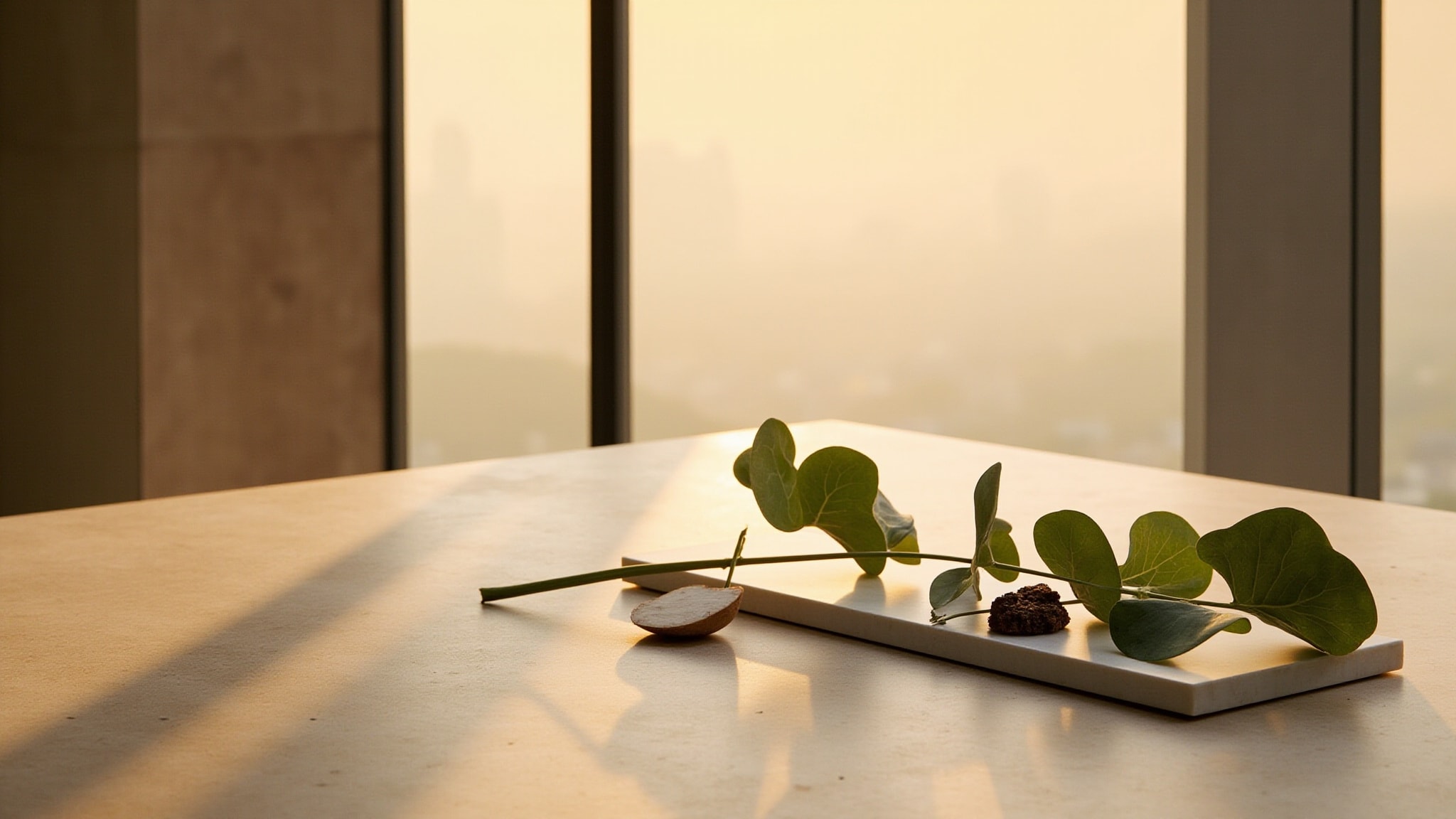
The pairing of angelica and eucalyptus is unusual in mainstream perfumery. Both are green in a sharp, camphorated way, they smell like crushed leaves, like medicine, like the moment before a fever breaks. Used here, they don't just open the fragrance. They set the tone for everything that follows. Even the oud seems cleaner for it.
The evolution
The opening is a cold room. Angelica and black pepper arrive together, cool and almost bracing, with bergamot doing the work of making it smell like morning rather than antiseptic. There's no softness here for the first twenty minutes. Then the eucalyptus opens up and the geranium arrives, and suddenly it smells like a garden that knows it's being watched. The Turkish rose absolute doesn't bloom loudly, it's more of a blush, a warmth that comes from somewhere underneath rather than above. By the time the drydown settles, the Mysore sandalwood and Malayan oud are doing the real work, with guaiac wood adding a slight smokiness that reads more mineral than campfire. Six to eight hours on most skin. The next morning there might be a trace, something soft and woody that stayed because it was allowed to.
Cultural impact
Emeraude Agar occupies an unusual position: it's an oud fragrance that doesn't smell like one. The green opening, angelica, eucalyptus, creates a fresh aromatic character that separates it from both traditional oud compositions and typical fresh colognes. Wearers describe it as the scent of someone who knows what they want but doesn't need to announce it.