
The Story
Why it exists.
The beginning
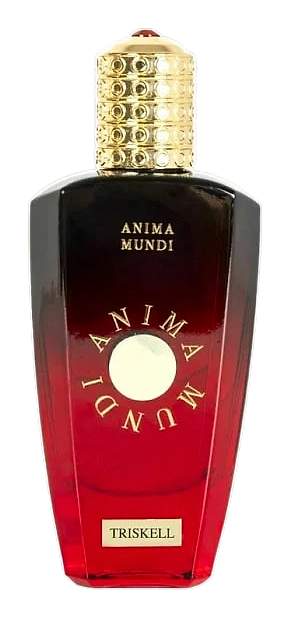
Triskell takes its name from the triskele, a spiral motif with deep roots in early European art. Anima Mundi released the fragrance in 2019, and the perfumer credited on the project is Andrea Thero Casotti. His composition answers a question you can almost smell rather than read: what does wheat smell like when it's still standing in a field, dusted with cold morning air and the sharp green of cypress at the edge of the trees? The structure answers in materials rather than words. Blueberry and wheat anchor the top, an unusual pairing that earns its strangeness once fir balsam settles underneath.
What makes Triskell structurally interesting is the way it refuses to settle into one genre. The blueberry and wheat opening leans almost gourmand-adjacent, while the Nootka cypress and balsam fir in the base drag the whole thing into resinous, coniferous territory. Coriander threads through the heart, adding a green, almost vegetal bite that keeps the sweetness honest. It's a composition that keeps shifting its accent, never quite committing to fruit or forest, never resting in a single mood for more than a few minutes at a stretch.
The evolution
The first fifteen minutes are all about confusion in the best way. Blueberry shows up sweet and almost candied, but the wheat underneath keeps it grounded, dry, like grain rather than jam. Artemisia adds a herbal bitterness that tempers the fruit before it gets cloying. Around the thirty-minute mark, the coriander and Nootka cypress take over. The sweetness recedes and something greener, woodier, more contemplative moves in. Bergamot keeps things from going too dark, adding a quiet brightness that feels like late-afternoon light through trees. By hour two, the balsam fir and Virginia cedar have claimed the composition. The musk underneath warms everything, giving the resin a skin-like softness. What's surprising is how long the blueberry ghost lingers, a faint sweetness that shows up in the creases of the fir like memory rather than scent. At the six-hour mark, you're mostly in cedar and musk territory, with the fir still humming underneath. On clothes the next day, the wheat comes back faintly, warm and dry, like straw in a barn that's been closed all winter.
Cultural impact
Triskell, named for the triple-spiral triskelion, arrived in 2019 and quickly carved out a space among collectors drawn to fragrances with unusual material pairings. The composition weaves blueberry, wheat, and artemisia around fir balsam and Virginia cedar, blending elements that don't usually share a bottle. The result reads as both pastoral and resinous, a combination that caught attention in niche circles for its willingness to mix edible notes with deep woods.
The House
Anima MundiAnima Mundi is a Swiss niche fragrance house that channels the spirit of ancient civilizations into wearable perfume. The name comes from Latin, meaning "Soul of the World", and the brand lives up to this cosmic ambition by drawing inspiration from lost empires, sacred rituals, and the sensory heritage of Mesopotamia, Egypt, and Rome. Each fragrance functions as a time machine, inviting wearers to experience the incense-laden air of ancient temples, the botanical gardens of antiquity, and the trade routes that once connected East and West. The house operates as part of the Niche and Co. family alongside Onyrico Parfums, both overseen by founders Giorgio Biella and Emilia Armida Chinigò. Anima Mundi fragrances are distinguished by their narrative depth, anchoring each composition to a specific historical moment or cultural practice. The collection spans pieces named after Egyptian deities, Maya cities, and sacred botanical traditions, creating a portfolio that reads like a fragrant history lesson.
The Creator
Andrea Thero CasottiCasotti favors contrast. He layers bright citrus or aromatic herbs with deep woods, amber, and oud, creating a push‑pull that keeps the nose engaged.