
The Story
Why it exists.
The beginning
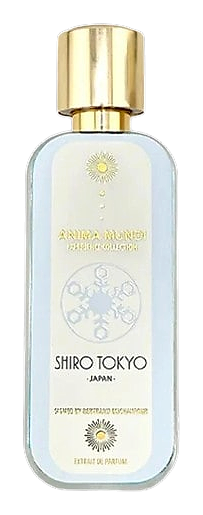
Tokyo on New Year's Eve. The city glows beneath countless lights, storefronts decorated for the season. But rather than joining the festivities, you choose something quieter: an evening at an onsen, a traditional Japanese hot spring fed by volcanic waters. Japan's volcanic geology has fed these hot springs for centuries, and soaking in them to wash away the old year is a ritual as old as the country itself. Many onsens are designed with expansive windows that frame breathtaking natural scenery, Mount Fuji rising in the distance, its peak snow-capped even as the waters below stay warm. This is the moment Shiro Tokyo captures. The cold air outside. The warm mineral waters within. The quiet transition between them. Bertrand Duchaufour translated this scene into scent, starting with rice powder, snow, and winter berries to evoke the sensation of cold air meeting warm skin, then building toward cedar and hinoki wood as the base.
The rice powder note is doing something unusual here. It carries that starchy, clean-skin quality you know from the inside of a freshly pressed shirt, but instead of feeling domestic, it reads cold. Crystalline. Like standing in fresh powder rather than standing in a steamy bathroom. The sesame and lavender add a quiet nuttiness and soft herbal quality that keeps the heart meditative rather than bright. This is not a fragrance that shouts. It builds an atmosphere. The tension between cold opening and warm drydown, between snow and volcanic water, between Mount Fuji's frozen peak and the warmth beneath, is what makes Shiro Tokyo feel like a specific place rather than a generic powdery scent.
The evolution
The opening arrives cold. Rice powder and winter berries create an almost sterile feeling, skin dusted with snow, that moment of stepping from frigid air into a prepared robe at the onsen entrance. The heart deepens. Iris and lavender powder grow more contemplative, sesame threading through like steam from volcanic waters. The drydown settles into a quiet woodiness, white musk and cedar-hinoki blend staying close to the skin, maintaining that serene onsen atmosphere. Sillage remains moderate throughout. Six to eight hours in, what lingers is a warm, serene presence close to the skin. Never loud.
Cultural impact
Shiro Tokyo diverges from Anima Mundi's typical historical focus, Mesopotamian temples, Egyptian rituals, Roman trade routes, instead drawing from Japanese hot spring culture and the quiet serenity of winter mornings. A notable departure for the house, but one that maintains their commitment to sensory immersion through scent.
The House
Anima MundiAnima Mundi is a Swiss niche fragrance house that channels the spirit of ancient civilizations into wearable perfume. The name comes from Latin, meaning "Soul of the World", and the brand lives up to this cosmic ambition by drawing inspiration from lost empires, sacred rituals, and the sensory heritage of Mesopotamia, Egypt, and Rome. Each fragrance functions as a time machine, inviting wearers to experience the incense-laden air of ancient temples, the botanical gardens of antiquity, and the trade routes that once connected East and West. The house operates as part of the Niche and Co. family alongside Onyrico Parfums, both overseen by founders Giorgio Biella and Emilia Armida Chinigò. Anima Mundi fragrances are distinguished by their narrative depth, anchoring each composition to a specific historical moment or cultural practice. The collection spans pieces named after Egyptian deities, Maya cities, and sacred botanical traditions, creating a portfolio that reads like a fragrant history lesson.
The Creator
Bertrand DuchaufourDuchaufour is the master of smoke and shadow, of incense rendered with painterly depth rather than theatrical force. Where many perfumers treat frankincense as a single note, he builds incense as a tonal range, capable of austerity or warmth depending on what the fragrance dem…