The Story
Why it exists.
The beginning
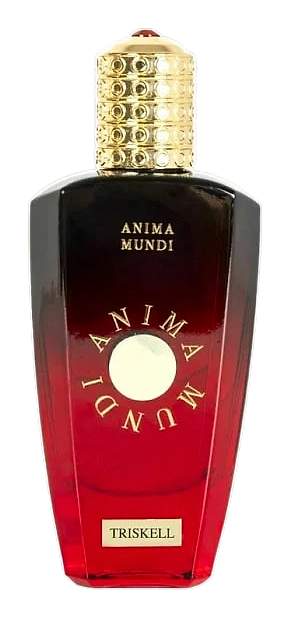
The ancient Maya built cities in the jungle and then let the jungle reclaim them. Tikal is one of those cities, a UNESCO site in Guatemala where temples still rise above the canopy, where howler monkeys answer the morning and the air smells of sap and stone and centuries. Anima Mundi named this fragrance for that place, for the civilization that made it, for the archaeologists who still walk its plazas wondering how a people known primarily through carved stone achieved such sophistication in astronomy, mathematics, and architecture. The perfumer Andrea Thero Casotti took the brief and returned something that feels like walking into the forest that surrounds those ruins, not the postcard version, but the real one, green and resinous and older than any single human lifetime.
What makes Tikal unusual is its structure: a fougere that refuses to stay in its lane. The opening is all sharp citrus and aromatic herbs, bergamot, lemon, sage, Russian coriander, the kind of bright, almost medicinal clarity you'd expect from a traditional fougère. But then the heart shifts. The coriander develops an unexpected curry-like warmth, the nutmeg adds a spiced depth that moves away from classic fougère territory and into something more resinous and modern.
The evolution
The first twenty minutes are the most arresting. Bergamot and sage arrive sharp, almost astringent, clearing the palate like a high-altitude breath. The coriander follows, one reviewer called it curry-adjacent, and that's not wrong, but it's also not the whole picture. There's a green, almost vegetally quality beneath the spice that keeps it from reading as foody. Then the heart softens. The nutmeg and mastic introduce a warm, resinous middle act that feels like stepping into a temple interior from the blazing heat outside. The transition to the base is gradual, no dramatic cliff, just a slow deepening. Cedarwood and sandalwood arrive together, woody and clean, while benzoin and myrrh add a sweetness that's more sacred than dessert. By hour four, you're in vanilla territory: warm, dry, intimate. This is the part people come back for. The longevity is real, expect a full workday, closer to eight hours than six, with moderate sillage that announces you to a close room but doesn't announce you to the hallway.
Cultural impact
Tikal occupies an unusual space in the niche fragrance landscape: a fougère that takes ancient Mesoamerican civilization as its conceptual framework, not as marketing backdrop but as genuine creative brief. The fragrance has found its audience among those who appreciate the aromatic-herbal tradition but want something with more resinous depth and historical weight than a classic barbershop fougère. Wearers tend to describe it as the scent of someone who walks into a room and doesn't need to announce themselves, confident, composed, with a complexity that reveals itself slowly.
The House
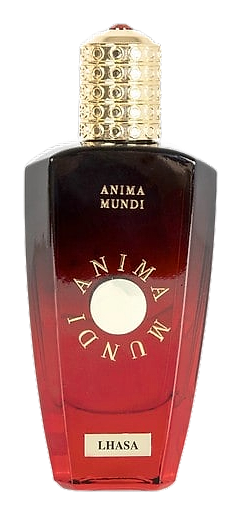
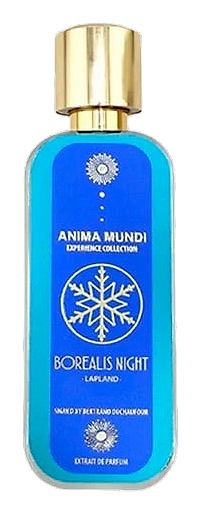
Anima MundiAnima Mundi is a Swiss niche fragrance house that channels the spirit of ancient civilizations into wearable perfume. The name comes from Latin, meaning "Soul of the World", and the brand lives up to this cosmic ambition by drawing inspiration from lost empires, sacred rituals, and the sensory heritage of Mesopotamia, Egypt, and Rome. Each fragrance functions as a time machine, inviting wearers to experience the incense-laden air of ancient temples, the botanical gardens of antiquity, and the trade routes that once connected East and West. The house operates as part of the Niche and Co. family alongside Onyrico Parfums, both overseen by founders Giorgio Biella and Emilia Armida Chinigò. Anima Mundi fragrances are distinguished by their narrative depth, anchoring each composition to a specific historical moment or cultural practice. The collection spans pieces named after Egyptian deities, Maya cities, and sacred botanical traditions, creating a portfolio that reads like a fragrant history lesson.
The Creator
Andrea Thero CasottiCasotti favors contrast. He layers bright citrus or aromatic herbs with deep woods, amber, and oud, creating a push‑pull that keeps the nose engaged.