The Story
Why it exists.
The beginning
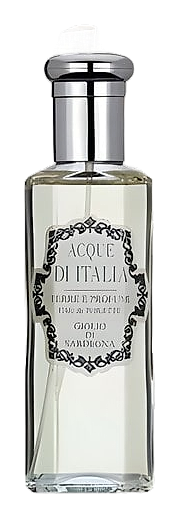
Sardinia is granite cliffs, salt wind, and a kind of stubborn beauty that doesn't perform for anyone. Acque di Italia named this one after giglio, the lily, and translated that particular tension into a white floral with backbone. The lily isn't a garden flower in this context; it carries a sweetness that reads almost animal in the heat, heavy and unguarded where the air is thick with resin and citrus peel. There's something of the island's character in the way the top notes crackle open with bergamot and orange flower, almost like sunlight on stone, before the tuberose and ylang-ylang settle into their slow, creamy weight.
What makes this composition worth a second look isn't the lily. It's the way honey sits at the base, almost structural, behaving less like a sweetness and more like a binding agent between the orange blossom heart and the amber-vanilla close. That honey note transforms what could have been a clean white floral into something warmer, closer to skin, with a faintly animalic undertone that keeps the whole thing from going pretty or polite. The orange top, four ways (sweet, bitter, tangerine, and cedar-bright), gives the entry enough bite to cut through the cream below.
The evolution
The first thirty minutes are almost aggressive in their brightness. Sweet orange and bitter orange arrive at the same time, one sugared, one sharp, and the cedar underneath keeps it from reading as simple citrus. The tangerine softens the edges just enough to make this wearable into an office. By the one-hour mark, the white florals take over completely. Orange blossom does the heavy lifting, jasmine adds its slightly indolic edge, and water lily brings a cool, watery transparency that keeps the heart from collapsing into pure sweetness. The transition into the base is gradual but definite. Around the third hour, amber and honey settle in, and the vanilla arrives like something remembered rather than declared. By hour six, what lingers is the honey-amber-vetiver close, warm, skin-like, with just enough cedar holding the structure together. The sillage drops into intimate territory after hour four. On fabric the next morning, there's a faint trace of honeyed amber, almost like a perfume ghost.
Cultural impact
Giglio di Sardegna earns its place among Mediterranean white florals with a composition that pushes beyond the usual airy, clean-lily archetype. The honey-amber warmth of its base, built on sandalwood, amber, musk, and vanilla, gives it a depth and staying power that softer coastal florals often lack. One reviewer has drawn a loose comparison to Acqua di Parma's Blu Mediterraneo line as a matter of personal taste, though the two sit in different weight classes.