
The Story
Why it exists.
The beginning
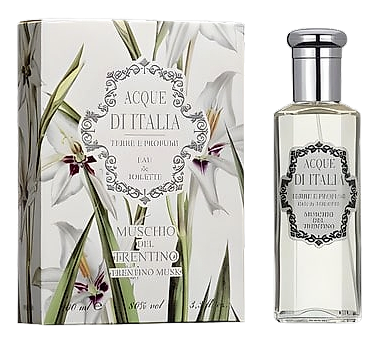
Muschio del Trentino takes its name from Trentino, the northern Italian region whose wooded terrain and alpine air shape the fragrance's central idea. The name itself anchors the composition in a specific landscape: cool, resinous and faintly mineral in character, suggesting mosses underfoot, pine resin warming on bark, and the still clarity of high-altitude air. As the opening settles, you notice a muted green softness that never tips into sharp herbal freshness. Instead, it reads as foliage from a distance, atmospheric rather than loud. What follows is a quiet transition into something floral but never sweet, the kind of petals you might press between the pages of a forgotten field guide, dried but still holding shape.
The unusual contrast lives in the structure. Carrot seeds bring a dry, lightly bitter start, while cypress and moss pull the composition into a vertical green landscape. Hyacinth, rhododendron and cyclamen introduce a floral current that feels more like air moving through undergrowth than a polished bouquet. Sandalwood and vetiver then make the scent drier and more grounded, with white musk smoothing everything into a powdery, skin-close finish.
The evolution
The opening begins with a crisp, earthy snap. Carrot seeds provide a lightly bitter edge, while cypress and moss establish a cool green outline, almost the smell of shaded bark after rain. As the first minutes pass, that sharper edge softens into hyacinth, rhododendron and cyclamen, bringing a translucent floral lift without turning overtly pretty. The composition then settles into its quieter register: sandalwood adds smooth wood, vetiver brings dry earth and grass, and white musk leaves a clean, powdery trace. By roughly 4-6 hours, the brighter materials have receded, while the woody, musky base can still read close to skin like a polished fragment of the forest.
Cultural impact
Muschio del Trentino belongs to a category of place-led fragrances that treat regional identity as a creative starting point rather than a decorative label. The composition stays restrained and personal in scale, built to be detected rather than announced, which gives it appeal for wearers who prefer their scent to feel like a private reference. The available research offers no grounded account of broad reception, critical response, or specific peer comparisons.